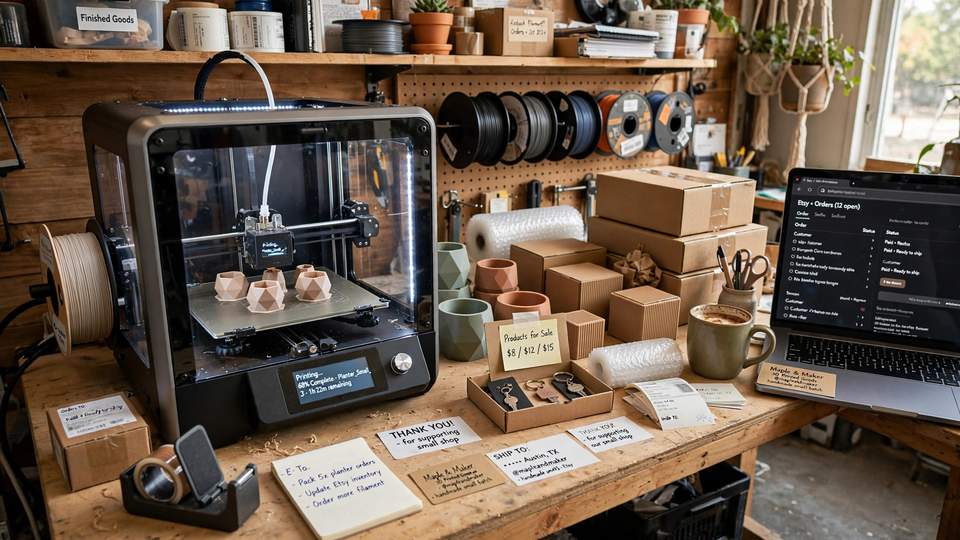
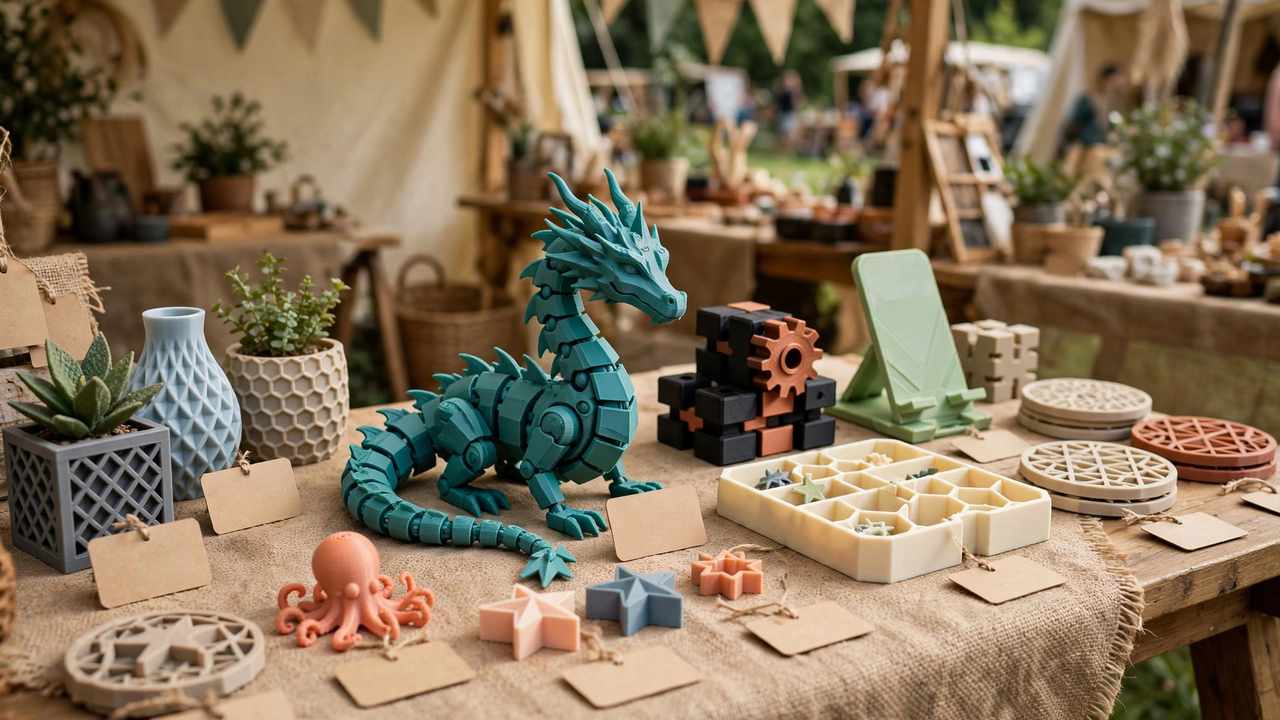
Learning how to price 3D printed products Australia-wide is the difference between a hobby that pays and one that quietly loses money.
Here’s an uncomfortable truth about selling 3D prints: most makers dramatically undercharge. They price at three times material cost, feel clever about it, and quietly lose money on every order once their time is counted — sometimes for years before they realise. Learning how to price 3D printed products properly — with Australian costs, Australian fees, and honest maths — is the difference between a hobby that pays for itself and a business that actually grows.
This guide walks through the complete pricing formula with real numbers, Australian electricity rates and marketplace fees, and the mistakes that keep makers broke.
Most advice on how to price 3D printed products Australia ignores marketplace fees — don’t make that mistake.
Why “3x Material Cost” Is Wrong
The most repeated pricing advice in 3D printing — “charge three times your material cost” — sounds sensible and is completely inadequate. Here’s why: on a typical print, filament is only about a quarter of your true cost. The rest is electricity, printer wear, your labour, packaging, and marketplace fees.
Take a 100g PLA part that takes 6 hours to print. Material: about $2.50. The popular 3x rule says charge $7.50. But the real cost — electricity, machine depreciation, fifteen minutes of hands-on time, and a failure buffer — comes to roughly $8–9 before profit. The 3x shortcut doesn’t even cover costs, let alone pay you.
Every order priced this way subsidises the buyer with your unpaid time. It’s not a pricing strategy; it’s a slow leak. Let’s do it properly.
How to Price 3D Printed Products Australia: The Complete Formula
The professional formula used by successful sellers:
Price = (Material + Machine Time + Labour + Overhead) × Profit Multiplier
Let’s break down each component with Australian numbers:
1. Material Cost
Filament cost per gram × part weight × waste factor (1.10 for supports, purge, and failed starts).
Standard PLA in Australia runs about AUD $25–$35 per kilo — roughly $0.025–$0.035 per gram. A 100g print therefore costs $2.50–$3.50 in material, plus 10% waste = ~$3–$4. Engineering filaments (nylon, polycarbonate, carbon-fibre) run $60–$90/kg, which changes the maths considerably — price those separately, not with PLA numbers.
Your slicer tells you the exact filament weight. Use it. Don’t guess.
2. Machine Time (Electricity + Depreciation)
Two parts here. First, electricity: a typical FDM printer draws 100–200W while printing. At Australian residential rates of roughly $0.25–$0.35/kWh (check your bill — it varies by state and retailer), a 150W printer costs about $0.04–$0.05 per hour. A 6-hour print: ~$0.30. Small, but real.
Second, depreciation — the cost most makers forget entirely. Your printer is a machine with a finite life. A $800 printer lasting ~4,000 print hours costs $0.20/hour in wear. That 6-hour print just consumed $1.20 of your printer’s lifespan, plus nozzle wear, plus eventual part replacements.
Combined machine time for our example: roughly $1.50 for 6 hours. It adds up across hundreds of prints.
3. Labour
Your time has value. Count every hands-on minute: slicing and setup, removing the print, support removal, sanding, post-processing, photography, packaging, and customer messages.
Value it honestly. Australia’s minimum wage is around $24–$25/hour (2025–26), and skilled maker labour is worth more — $30–$40/hour is reasonable for design and finishing work. Fifteen minutes of hands-on time at $30/hour = $7.50. Notice how labour dwarfs material cost? That’s normal, and it’s why the 3x-material rule fails so badly.
4. Overhead
The background costs of running your operation: workspace, storage, tools, software subscriptions, photography equipment, packaging supplies, and your time spent on admin. Total your monthly overhead and divide by prints per month. For a home setup, $1–$3 per print is typical.
5. Profit Multiplier
Now — and only now — apply your margin:
- 1.5x: entry-level / competitive pricing
- 2.0x: standard retail (the healthy default)
- 2.5–3.0x: premium, custom, or one-off pieces
Alternatively, work backwards from a target margin: divide true cost by (1 − margin). A $8.58 true cost at 60% margin = $21.45. The detailed methodology at Craftstrack’s pricing guide walks through this margin maths with worked examples.
Worked Example: Priced Three Ways
Let’s price a real product — a medium desk organiser, 120g PLA, 8-hour print:
- Material: 120g × $0.03/g × 1.10 = $3.96
- Machine time: 8 hrs × $0.25/hr (power + wear) = $2.00
- Labour: 35 min hands-on × $30/hr = $17.50
- Overhead: $2.00
- True cost: $25.46
- At 2.0x retail: $50.92 → list at $51
Compare: the 3x-material shortcut would price this at $12. You’d lose $13+ per sale before fees. This is why makers who “feel” their prices burn out — the maths was against them from day one.
Once you know how to price 3D printed products Australia customers will actually pay for, raise your rates with confidence.
Marketplace Fees: The Silent Margin Killer (Australia)
Your price isn’t what you receive. Australian marketplace fees in 2026:
- Etsy: ~6.5% transaction fee + ~3% + $0.25 payment processing + listing fees. Budget roughly 10–12% all-in.
- eBay Australia: ~13–14% final value fee for most categories, plus payment processing.
- Your own site (Shopify/WooCommerce): payment processing ~1.75–2.9% + subscription costs. Lower fees, but you handle all marketing.
- Local markets/fairs: stall fees ($50–$200/day in Australian metro markets) divided across expected sales.
Gross up your price so fees come out of the buyer’s side, not your margin: platform price = (target price + fixed fees) ÷ (1 − percentage fees). A $51 target on Etsy at ~11% fees lists at roughly $58. Skip this step and you’re quietly handing your profit to the marketplace.
How to Price 3D Printed Products Australia: Hobby vs Business Tax Reality
This matters and most guides skip it. In Australia, the ATO distinguishes between a hobby and a business based on intention, repetition, and scale — not just revenue. Occasional sales to friends: hobby. Regular Etsy listings with profit intent: business.
If you’re operating as a business:
- Get an ABN (free from the Australian Business Register). You’ll need it for tax invoices and it legitimises your operation.
- Track everything. Material costs, printer depreciation, electricity, fees — proper records are both a tax requirement and the data that makes your pricing accurate.
- GST: you must register once turnover hits $75,000/year. Below that it’s optional, but registration lets you claim GST credits on business purchases.
- Talk to an accountant before you scale. An hour of professional advice is cheaper than a tax mistake.
This isn’t legal advice — it’s a nudge to take the business side seriously from the start. The makers who succeed treat pricing as a business discipline, not a guessing game.
Pricing Strategies That Actually Work
Value-based pricing beats cost-plus for unique items. The formula gives you your floor — never sell below true cost. But a custom lithophane lamp or a perfectly fitted replacement part is worth what the buyer will pay, which may be well above 2x cost. Cost-plus keeps you solvent; value pricing makes you profitable.
Bundle to raise average order value. A $15 item plus $12 shipping feels expensive; three items for $40 with “free” shipping feels like a deal. Design product families that bundle naturally — coaster sets, organiser collections, themed gift packs.
Charge for design time separately. Custom work — “can you design me a…” — is skilled labour. Quote it hourly ($40–$80/hr for CAD work in Australia) on top of print pricing. Giving design away free is the fastest way to attract nightmare clients.
Raise prices as you get busy. A waiting list means you’re underpriced. Increase 10–15% and watch what happens — demand for good work is less price-sensitive than makers fear. Our gifts guide shows which products have the best margins to start with.
Track your numbers monthly. A simple spreadsheet — revenue, material spend, fees, hours worked — tells you your real hourly rate. If it’s below what you’d accept as a wage, something has to change: prices up, costs down, or efficiency up. What gets measured gets managed, and most makers who start tracking are shocked by what they find.
Common Pricing Mistakes
- Copying competitors’ prices blindly. Their costs aren’t yours. Someone with five printers and wholesale filament can profit where you’d lose.
- Forgetting failed prints. Build a 5–10% failure buffer into costs. New materials or complex geometries: 15–25%.
- Free shipping absorption. “Free shipping” isn’t free — it’s baked into the price. Calculate actual Australia Post rates for your package sizes.
- Discounting to get sales. Discounts train buyers to wait for sales. Instead of cutting price, add value (bundle, personalisation, faster turnaround).
- Ignoring your time. The big one. If you’d pay someone $30/hr to do your post-processing, charge at least that for your own.
Keep your printer reliable too — breakdowns blow up your labour costs per unit. Our maintenance schedule keeps cost-per-print predictable.
Pricing Digital Products: Selling STL Files
Physical prints aren’t the only revenue stream. Selling digital STL files — on Cults3D, MyMiniFactory, or your own site — has near-zero marginal cost: design once, sell forever. Pricing works differently:
- Simple models: $2–$5. Hooks, clips, basic organisers. Volume game.
- Complex original designs: $8–$20. Detailed miniatures, intricate mechanisms, tested functional parts.
- Commercial licences: 3–5x the personal price. Many sellers offer a separate tier letting buyers sell physical prints of the design — this is where real money lives.
- Bundles and memberships: monthly STL packs or Patreon-style subscriptions create recurring revenue that physical sales can’t match.
Protect your work with clear licensing terms, and watermark preview images. Piracy happens — price fairly and most honest buyers will pay. The designers earning serious money from STLs treat it as a product business: consistent releases, good photography, responsive support.
Wholesale and Stockist Pricing
When a shop wants to stock your prints, the maths changes. Standard wholesale is 50% of retail — your $51 desk organiser wholesales at ~$25. That only works if your true cost is well under $25 with margin to spare, which means wholesale favours simple, fast-printing designs with minimal labour.
Before agreeing: confirm minimum orders (never do onesies at wholesale), payment terms (upfront for first orders), and who’s responsible for defects. Get it in writing — even a simple email agreement. A stockist relationship can be wonderful recurring revenue or a slow bleed, depending on the terms.
Knowing When to Raise Prices
Raise your prices when:
- You have a waiting list or consistent multi-week lead times
- You’re working evenings and weekends to keep up
- Customers never haggle (your prices are too low)
- Material or power costs increase (review costs quarterly)
- You’ve improved quality — better finishing, better packaging, better designs deserve better prices
Increase 10–15% at a time and watch. Most makers discover demand is far less price-sensitive than they feared — especially for custom and personalised work where there’s no direct comparison. The customers you lose to a 15% increase were your worst customers anyway: the hagglers, the rush-order demanders, the ones who message six times before buying.
Review your full price list twice a year. Costs creep — filament, power, fees, your own skill value — and prices should creep with them. The alternative is a slow, invisible pay cut that you only notice when you wonder why you’re working harder for the same money.
Frequently Asked Questions
How much should I charge per hour for 3D printing?
Separate machine time ($1–$3/hr covering power and depreciation) from your labour ($25–$40/hr in Australia for hands-on work). Don’t blend them — they behave differently as you scale.
What is a good profit margin for 3D printed products?
Healthy margins run 30–60% depending on complexity and channel. After Etsy fees and materials, successful sellers typically net 35–45%. Below 30% and you’re one bad month from losing money.
Do I need an ABN to sell 3D prints in Australia?
If you’re selling regularly with profit intent, yes — get a free ABN from the Australian Business Register. Occasional hobby sales don’t require one, but regular trading does.
How do Etsy fees work for Australian sellers?
Budget roughly 10–12% all-in: ~6.5% transaction fee, ~3% + $0.25 payment processing, plus listing fees. Gross up your prices so fees come from the buyer’s side, not your margin.
Should I charge for failed prints?
Indirectly, yes — build a 5–10% failure buffer into your cost calculations (15–25% for tricky materials). Don’t itemise it to customers; just make sure your pricing absorbs it.