
Turning your 3D printer into income is the dream — and to sell 3D prints on Etsy Australia successfully, you need more than a printer and a good idea. But between fees, licensing traps, pricing math, and brutal competition, most sellers quit within months. This 2026 guide gives you the complete playbook: real Australian fee breakdowns, ABN and tax setup, the niches that actually sell, pricing formulas that keep you profitable, licensing rules that keep you legal, and shop SEO that gets you found.
Sell 3D Prints on Etsy Australia: Is It Worth It in 2026?
Honest answer: yes, but only with the right strategy. The days of uploading generic Baby Groot planters and printing money are over — those niches are saturated by sellers with print farms. What works in 2026:
- Niche specialisation: one category, done better than anyone (e.g., Australian native plant pots, not “planters”)
- Customisation: personalised names, custom sizes, made-to-order colours — things mass sellers can’t easily copy
- Local advantage: Australian buyers pay premiums for fast local shipping vs 3-week waits from overseas sellers
- Design originality: your own designs (or properly licensed ones) beat reselling free STLs everyone else has
Etsy Australia Fees (2026): The Real Numbers
Fees are where sellers get burned. Here’s the complete 2026 breakdown for Australian sellers:
- Listing fee: ~A$0.30 per listing (US$0.20 converted); lasts 4 months or until sold
- Transaction fee: 6.5% of the total sale (item price + shipping + gift wrap)
- Payment processing: 3% + A$0.25 per order (Australian bank accounts)
- GST on fees: Etsy charges 10% GST on all its fees to Australian sellers (claimable if you’re GST-registered)
- Offsite ads: 15% on sales from Etsy’s external ads (optional under $10k USD/year revenue; mandatory 12% above — capped at $100/order)
- Currency conversion: 2.5% if your shop and bank currencies differ (keep both in AUD)
Worked example — $50 AUD sale:
- Transaction fee: $3.25 (6.5%)
- Payment processing: $1.75 (3% + $0.25)
- Listing fee: $0.30
- GST on fees: ~$0.53
- Total Etsy cost: ~$5.83 (~11.7%)
- You keep: ~$44.17 before materials, power, and your time
Rule of thumb: expect 10–12% to vanish in fees. Price accordingly.
ABN, Tax & Legal Setup for Australia
- ABN: free from the Australian Business Register. You need one if you’re running a business (regular sales with profit intent) — and having one lets you claim GST credits.
- GST registration: mandatory at $75,000 annual turnover; voluntary below that. If registered, claim back the GST Etsy charges on fees.
- Income tax: Etsy income is taxable. Keep records from day one — a simple spreadsheet of revenue, fees, filament, and power costs.
- Business name: register with ASIC if trading under a name other than your own (~$44/year).
- Insurance: consider product liability insurance once you’re selling regularly — especially for children’s items or functional parts.
Not financial advice — chat with an accountant when revenue becomes meaningful.
Sell 3D Prints on Etsy Australia: Best-Selling Niches
What actually moves in 2026:
Strong niches
- Custom cookie cutters: personalised shapes for events; fast prints, high margins, repeat buyers
- Australian-themed décor: native flora/fauna designs overseas sellers don’t offer
- Organisers with a twist: Gridfinity-compatible, hobby-specific (card games, makeup, tools)
- Replacement parts: unglamorous but evergreen — dishwasher racks, vacuum clips, appliance knobs
- Wedding/event items: custom signage, table numbers, favours — high willingness to pay
- Pet accessories: custom tags, feeders, toys — passionate buyers
Saturated niches (avoid unless you have a genuine edge)
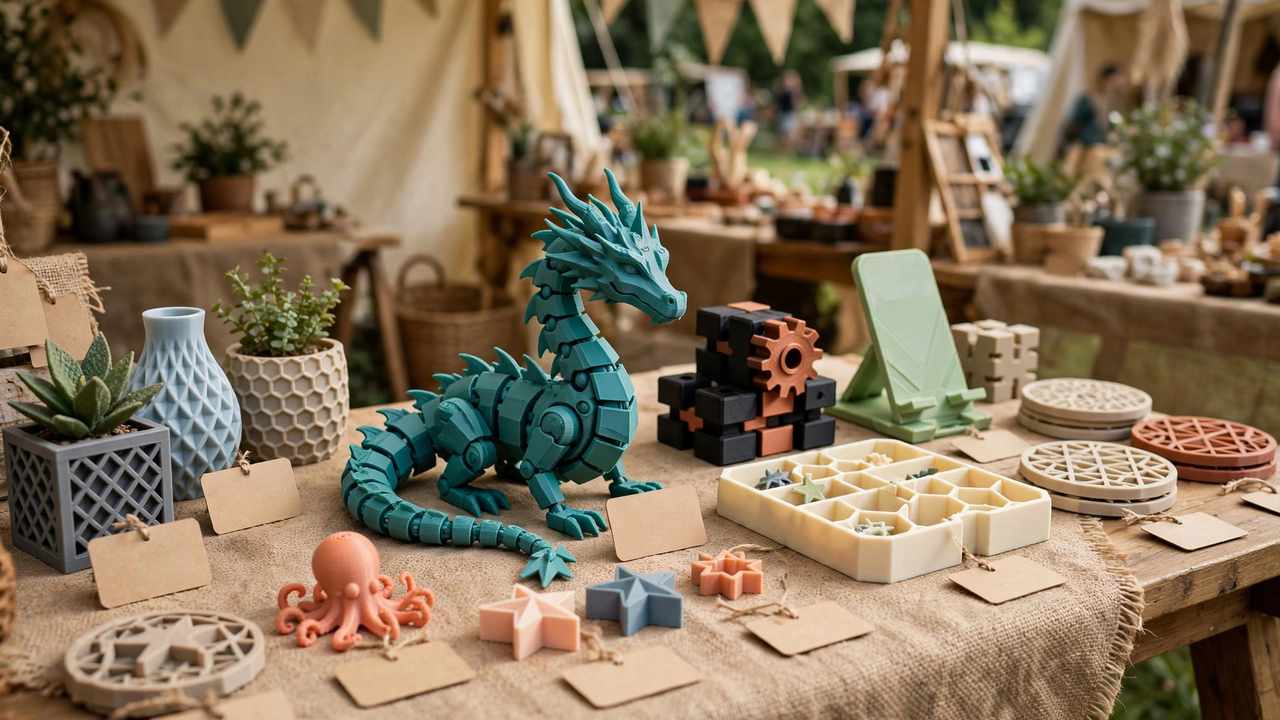
- Generic flexi dragons and articulated toys
- Basic planters and vases
- Unlicensed pop-culture items (also illegal — see below)
The Licensing Trap (Read This Before Listing Anything)
Most 3D model files are personal-use only. Selling prints of them without permission is copyright infringement, and Etsy actively removes infringing listings. Rules:
- Your own designs: always safe — and your biggest competitive advantage
- Merchant-licensed files: many creators sell commercial tiers on Patreon/Tribes ($15–$30 AUD/month) — buy the license, keep the receipt
- Public domain / CC0: safe, but everyone else has them too
- Pop culture (Pokémon, Disney, etc.): never legal without a licence, no matter how many other sellers do it — they’re just uncaught yet
- Free STLs marked “non-commercial”: respect it. Message creators — many grant permission if asked nicely
Pricing Formula That Actually Works
Don’t guess. Calculate:
Price = (Material cost + Power + Fees + Labour + Profit) with positioning sense-check
- Material: weigh a print, multiply by your filament $/gram (e.g., 80g × $0.04/g = $3.20)
- Power: ~$0.50–$1.50 per print depending on duration and your electricity rate
- Fees: add 12% to cover Etsy’s cut
- Labour: your time has value — even $15/hr for handling, packing, and customer messages
- Profit: minimum 30–50% margin after all costs, or it’s a hobby not a business
- Failed prints: factor in ~10–15% failure/waste rate across your production
Example — custom cookie cutter: $1.20 material + $0.50 power + $2 labour + 50% margin = ~$5.70 cost → list at $12–$15 after fee buffer. The market bears it because it’s custom.
Never compete on price alone against overseas sellers — you’ll lose. Compete on customisation, speed, quality, and Australian-made appeal.
Shop Setup & SEO
- Shop name: memorable, niche-relevant, searchable
- Titles: front-load keywords buyers search (“Personalised 3D Printed Cookie Cutter — Custom Name | Australian Made”)
- Tags: use all 13; mix broad (“3d printed gift”) and specific (“custom cookie cutter australia”)
- Photos: the #1 conversion factor. Natural light, lifestyle shots (product in use), scale references, clean white backgrounds for the lead image
- Descriptions: dimensions, materials, colours, production time, shipping times — answer every question before it’s asked
- Policies: clear production times (e.g., “made to order, ships in 3–5 business days”), returns, and custom-order terms
- Reviews: early reviews are gold — consider a small launch discount to generate initial sales and feedback
Shipping in Australia
- Australia Post: the default; get a MyPost Business account for discounted rates
- Sendle: often cheaper for parcels, worth comparing per shipment
- Packaging: rigid mailers or small boxes; 3D prints break in transit more than you’d think — pad well
- Free shipping threshold: Etsy boosts listings with free shipping guarantees; build the cost into your price
- Tracking: always — untracked parcels are dispute magnets
Scaling: From Side Hustle to Print Farm
- One printer: fine for testing demand and custom low-volume work
- 2–4 printers: the sweet spot for a serious side income — run the same model across machines
- Standardise: one filament brand, one profile, documented settings — consistency is quality
- Batch production: print overnight and during work hours; pack in batches
- Know your numbers: track revenue, costs, and hours monthly. If hourly earnings drop below your day-job rate, adjust prices or niche
Verdict
Selling 3D prints on Etsy Australia works in 2026 — but as a business, not a lottery ticket. If you’re ready to sell 3D prints on Etsy Australia, start with one niche, ten great listings, and honest math. The winners have original or licensed designs, calculated pricing with real margins, professional photos, and niches too specific for print farms to bother with. Start with one niche, ten great listings, and honest math. The printer you already own is the hardest part done.
New to the craft? Start with our 3D printing beginner guides.
Marketing: Getting Found and Getting Sales
Listing is not selling. Etsy is a search engine — treat it like one:
- SEO is everything: buyers search “personalised cookie cutter australia”, not your shop name. Put exact buyer phrases in titles and tags.
- Renew strategically: renewing a listing bumps it in search briefly — schedule renewals for Thursday–Sunday when buyer traffic peaks
- Social proof loop: include a thank-you card requesting reviews; 20+ reviews with photos transforms conversion rates
- Pinterest: disproportionately effective for 3D printed décor and gifts — one viral pin can drive months of traffic
- TikTok/Instagram process videos: timelapses of prints are inherently watchable; “watch me print your order” content builds trust and followers
- Repeat buyers: the cheapest customer is an existing one — include discount codes for return purchases in every parcel
7 Beginner Mistakes That Kill Etsy Print Shops
- Pricing without math: “filament was $3 so I’ll charge $8” ignores fees, power, labour, and failures — the shop bleeds money invisibly
- Ignoring licensing: one takedown notice can nuke your shop’s standing; build on safe foundations from day one
- Too many unrelated products: a shop selling dragons, planters, and phone stands looks unfocused — niche down
- Bad photos: dark, blurry phone pics on a messy desk. Photography is the highest-ROI improvement available.
- No production buffer: promising 2-day dispatch then drowning in orders — set honest production times and stick to them
- Skipping the ABN/paperwork: fine until it isn’t — set it up properly from the start
- Competing on price: the race to the bottom has no winners; differentiate or die
Etsy Alternatives for Australian Sellers
Etsy isn’t the only option — and for some sellers, it’s not the best:
- Your own Shopify/website: no marketplace fees, full brand control — but you drive 100% of traffic yourself. Makes sense once you have repeat customers.
- eBay Australia: bigger local audience, lower fees on some categories, but less “handmade” positioning
- Facebook Marketplace / local groups: zero fees, cash on pickup — great for bulky items where shipping kills margins
- Instagram + direct: build an audience showing your process, sell via DMs or a simple storefront link
- Craft markets: Australian weekend markets (Finders Keepers, local council markets) — nothing beats letting customers hold your work; many sellers report markets outperforming online per-hour
The smart play: start on Etsy for discovery, build an email/social following, then migrate repeat buyers to your own store where margins are 100%. Etsy as customer acquisition, not permanent landlord.
Your First 30 Days: Action Plan
- Days 1–3: research your niche, verify 2–3 product ideas aren’t saturated, check licensing for any files you’ll use
- Days 4–7: perfect your prints — dial in settings until output is flawless; photograph test pieces to learn your lighting setup
- Days 8–14: open the shop, list 5–10 products with professional photos and SEO titles, set up ABN
- Days 15–21: drive initial traffic — share in relevant communities (without spamming), list a small launch discount
- Days 22–30: fulfil first orders obsessively well, request reviews, analyse which listings get views, double down on winners
Goal for month one isn’t profit — it’s learning: which products get clicks, what buyers ask, where your process breaks. Month two is for optimising. The sellers who survive year one are the ones who treated month one as school.
Tax-Time Checklist for Etsy Sellers
- Download Etsy’s annual CSVs (revenue, fees) from Shop Manager → Finances
- Total material costs from filament purchase receipts
- Electricity: estimate printer wattage × hours × your kWh rate (or use a plug meter for precision)
- Home office: if eligible, claim the ATO’s fixed-rate method for the workspace portion
- Keep everything 5 years — the ATO can ask
- When in doubt, talk to an accountant — one hour of advice beats one year of worry
Handling Difficult Customers
- “It broke”: ask for a photo first — half the time it’s misuse; replace or refund gracefully for genuine defects, it’s cheaper than a bad review
- Unrealistic expectations: clear listing photos and descriptions prevent most disputes — show layer lines honestly rather than hiding them
- Slow messages: set expectations in your shop announcement (“I reply within 24 hours”) and use Etsy’s saved replies for common questions
- Bad reviews: respond professionally and publicly, fix what you can — future buyers read responses more than the complaint
- Know when to refund: a $15 refund beats a 1-star review that costs you ten future sales
What does it cost to start selling on Etsy Australia?
Beyond the printer, budget listing fees, Etsy’s transaction cut and possible offsite-ad fees. To sell 3D prints on Etsy Australia profitably, most sellers add 15–20% on top of their base price formula to cover the platform’s cut.
Frequently Asked Questions
How much does Etsy take from Australian sellers?
10–12% total: 6.5% transaction + 3% + $0.25 processing + ~$0.30 listing + 10% GST on fees.
Do I need an ABN to sell on Etsy in Australia?
Yes for regular business selling — free from the Australian Business Register. GST registration at $75k turnover.
Can I sell 3D prints of downloaded STL files?
Only with commercial/merchant license from the creator. Most free STLs are personal-use only.
What 3D prints sell best on Etsy Australia?
Custom cookie cutters, AU-themed décor, specialised organisers, replacement parts, wedding items, pet accessories.
How should I price 3D printed items?
Materials + power + labour + 12% fees + 30–50% margin. Never race overseas sellers to the bottom on price.
Fee data checked October 2026. For official fee details see Etsy’s Fees & Payments Policy. Tax info: ato.gov.au.