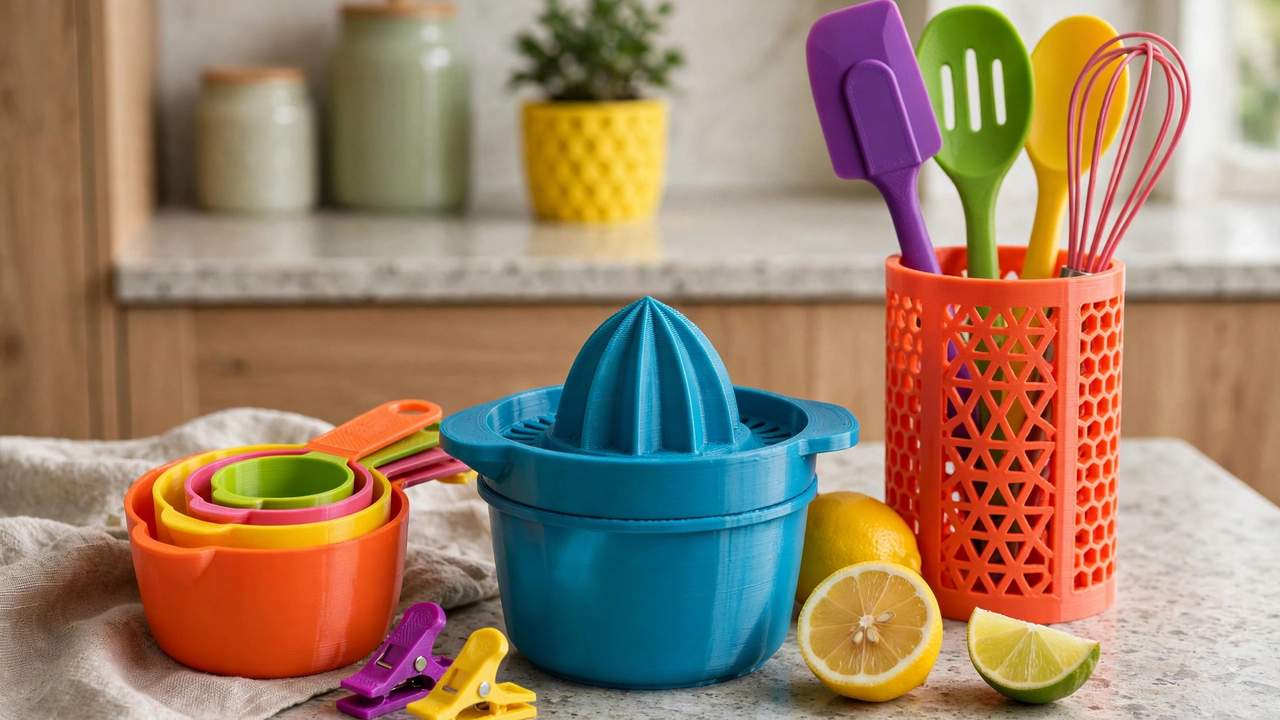
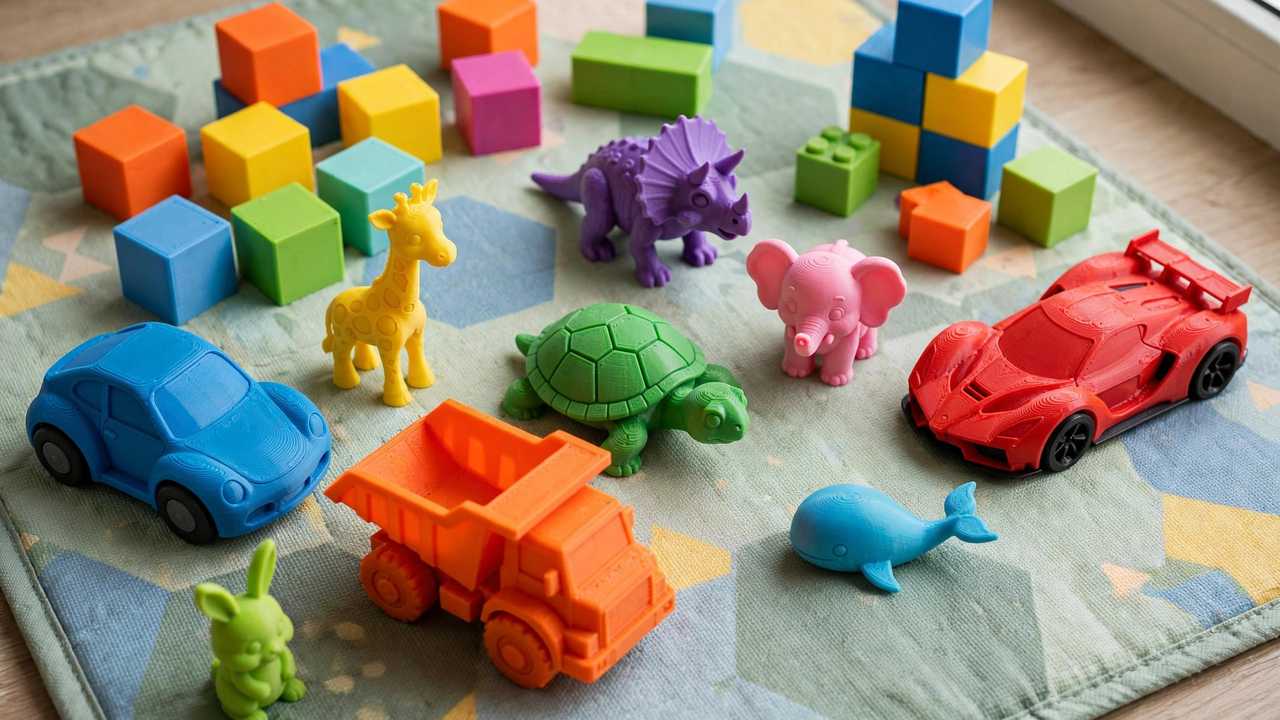
Printing 3D printed toys for kids is one of the most rewarding things you can do with a 3D printer — watching a child’s face light up when you hand them something you made is hard to beat. But before you fire up the printer, there’s something every parent and maker in Australia needs to understand: toys for children come with real safety obligations, and 3D printed toys are no exception. Every one of the 3D printed toys for kids below was chosen with Australian safety standards in mind.
In August 2025, the ACCC issued an urgent recall (PRA 2025/20603) for 3D mini animal toys sold at Kmart and Target across Australia after they broke apart into small pieces posing a choking hazard. That recall is a stark reminder: a cute print is not automatically a safe toy. This guide covers 15 genuinely safe toy designs to print, the Australian safety standards you need to know, the right materials and settings, and the designs to avoid.
Australian Toy Safety: What the Law Says
Australia has mandatory safety standards for toys, and they apply whether you bought the toy or printed it — especially if you ever give or sell printed toys to others.
- Age scope: The mandatory standard for small parts applies to toys designed or marketed for children up to and including 36 months. Toys for under-3s must not release small parts during play or after reasonable wear and tear.
- The standard: Compliance is assessed against AS/NZS ISO 8124 (or equivalent ISO, EN 71, or ASTM F963 sections) — covering mechanical and physical properties like small parts, sharp edges, and torque/tension resistance.
- Lead and elements: A separate mandatory standard (Consumer Protection Notice No. 1 of 2009) limits migration of lead and other heavy elements in toys and finger paints.
- Recalls are real: In 2024-25 the ACCC published 248 product recalls, many involving children’s products. Non-compliant toys can be forcibly recalled with serious legal consequences for suppliers.
The practical takeaway for home printing: stick to toys for older children (3+), avoid small detachable parts, and never print toys for babies and toddlers unless you deeply understand the standards. For more background on the regulatory landscape, the ACCC’s mandatory standard for toys containing lead and other elements is the authoritative reference.
Safe Materials for Kids’ Toys
Material choice matters as much as design. Here’s what to use — and what to avoid:
Best Choices
- PLA (polylactic acid): The safest default. Plant-based, low odour, prints at low temperatures, and widely regarded as the most benign common filament. Use reputable brands — cheap no-name PLA can contain unknown additives.
- PETG: Tougher than PLA and more impact-resistant, which means less chance of shattering into sharp pieces. Slightly harder to print but worth it for toys that’ll take a beating.
Avoid for Kids’ Toys
- ABS: Emits styrene fumes when printing and isn’t ideal for mouth-contact items.
- Resin (SLA): Uncured resin is toxic, and even cured resin isn’t food-safe or certified for toys. Keep resin prints away from small children.
- Glow-in-the-dark / metallic filaments: Often contain additives (strontium aluminate, metal powders) not tested for toy safety.
- Any filament with unknown composition: If the manufacturer won’t disclose what’s in it, don’t give it to a child.
For a deeper dive on material properties, see our PLA vs PETG vs ABS filament comparison.
15 Safe 3D Printed Toys for Kids
These categories are proven winners — engaging for kids, printable on a standard FDM machine, and designed with safety in mind. Look for them on print repositories by searching these terms:
Building and Construction Toys
1. Interlocking building blocks — Oversized, chunky blocks (Duplo-scale, not Lego-scale) that even toddlers can’t choke on. Print in bright PLA colours.
2. Marble runs (large-marble version) — Use marbles too large to swallow, or better, wooden balls 40mm+. A fantastic STEM toy for ages 5+.
3. Gear boards — Flat panels with meshing gears kids can turn. No small parts, endlessly fascinating for mechanically-minded kids.
Vehicles
4. Chunky toy cars and trucks — Print as single solid pieces with no detachable wheels. Scale them up — bigger is safer and more satisfying for small hands.
5. Toy boats — Simple hull designs that actually float. Print in PETG for water resistance. Great bath toys for supervised play.
Creative Play
6. Cookie cutters — Seasonal shapes, letters, animals. Print with thick walls so they survive enthusiastic pressing. (Food-contact note: use for one baking session or line with care — see the food safety section below.)
7. Stamps and stencils — Custom stamps with kids’ names or favourite shapes. Big handles, no small parts.
8. Play money and tokens — Oversized coins for shop games. Excellent for learning maths through play.
Puzzles and Brain Teasers
9. Simple jigsaw puzzles — Large pieces (50mm+) with familiar shapes. Print the base board too so pieces have a home.
10. Labyrinth marble games — Tilt-to-guide puzzles with a captive large ball. The ball can’t escape, so no choking risk.
Outdoor and Active
11. Water squirters — Simple pump designs printed in PETG. Summer holiday gold.
12. Kites and gliders — Lightweight PLA gliders that actually fly. Print thin and light.
Learning Aids
13. Alphabet and number sets — Big tactile letters for early learners. Round all edges in the design or sand them smooth.
14. Dinosaur and animal figures (large scale) — Print them BIG — 150mm+ tall. At that scale they’re display pieces kids can handle safely, not the tiny articulated animals that triggered the 2025 recall.
15. Custom name plates and door signs — Kids love seeing their name in 3D. Zero safety concerns, maximum delight. These also make great 3D printed gifts.
Designs to Avoid (or Print With Extreme Caution)
- Small articulated animals/figures — the exact category recalled in 2025. Tiny joints break; tiny parts choke.
- Toys with small detachable parts — wheels, hats, accessories that pop off.
- Anything for under-3s — the mandatory standard is strictest here. Buy certified toys for babies and toddlers; don’t print them.
- Projectile toys — separate mandatory requirements cover projectile force and eye safety.
- Toys with button batteries — battery compartments must require a tool to open. Don’t design around coin cells for kids’ toys.
Print Settings for Stronger, Safer Toys
- Walls/perimeters: 4-6 walls minimum. More walls = stronger parts that don’t snap into pieces.
- Infill: 30-50% for toys that’ll be handled roughly. Gyroid infill distributes impact well.
- Layer height: 0.2mm is fine; 0.12-0.16mm gives smoother surfaces with fewer sharp layer edges.
- Orientation: Orient so layer lines run across expected stress, not along it — layer adhesion is always the weak axis.
- Post-processing: Sand any sharp edges or elephant’s foot. A quick pass with fine sandpaper transforms a print from “sharp” to “toy-safe.”
- Scale up: When in doubt, print bigger. A 150% scale toy is safer and more fun for small hands than a fiddly 100% version.
Food Contact: A Quick Warning
Cookie cutters come up a lot, so let’s be clear: FDM prints are not food-safe in the strict sense. Layer lines harbour bacteria, and most filaments aren’t certified for food contact. For occasional cookie-cutter use: print in natural (uncoloured) PLA or PETG from a reputable brand, use once or twice, wash thoroughly, and retire them. Don’t sell “food-safe” printed items without understanding the regulations — that’s a legal minefield.
Teaching Kids About 3D Printing Safely
Printing with kids is wonderful — printing for small kids needs care. Any 3D printed toys for kids you make deserve a quick safety check before they reach little hands. If you’re introducing children to the hobby, our 3D printing in education guide covers classroom-safe approaches. Key rules: kids watch, adults handle the hotend; explain why some designs are for bigger kids; and let them choose colours and models from your pre-screened safe list.
3D Printed Toys for Kids by Age Group: What’s Appropriate When
Not all “kids’ toys” are for all kids. Here’s how to think about age appropriateness when choosing what to print:
Ages 3-5: Big, Simple, Indestructible
At this age, everything goes in the mouth and everything gets thrown. Stick to single-piece prints with no detachable parts: chunky blocks, large animal figures (150mm+), thick cookie cutters, and simple puzzles with pieces bigger than 50mm. Print everything at 150-200% scale compared to what you’d make for an older child. Walls at 5-6 perimeters, 40%+ infill — these toys need to survive being used as hammers.
Ages 6-8: Building and Creating
Fine motor skills are developing. Marble runs (with large balls), gear boards, interlocking construction sets, and simple mechanical toys shine here. Kids this age love toys they can assemble and disassemble — prints with sliding or snap-fit joints are perfect, as long as the parts are too large to swallow. This is also the sweet spot for printing with kids: let them choose colours and watch the printer work.
Ages 9-12: Complexity and STEM
Older kids can handle — and crave — more sophisticated prints: working locks, puzzle boxes, RC car parts, drone components, and detailed models. Articulated figures become safer at this age since the choking hazard diminishes (though small parts are still a bad idea for kids who tend to chew). This is the age where 3D printing shifts from “toy” to “tool” — kids start designing their own modifications.
Teens: Functional Prints
Phone stands, desk organisers, cosplay props, custom game pieces — teens want prints with real utility or serious cool factor. Safety concerns are minimal beyond normal print hygiene, but it’s a great age to teach the full workflow: design, slicing, printing, and post-processing.
The Business of Printed Toys: Know Before You Sell
It’s tempting to turn cute prints into market-stall income, but selling toys triggers serious legal obligations in Australia:
- You become a supplier under Australian Consumer Law the moment you sell. Mandatory toy standards apply to your products — all of them, including the small-parts standard for under-3s and lead/migration limits.
- Testing isn’t optional. Commercial toy sellers have their products tested against AS/NZS ISO 8124 by accredited labs. Home printing without testing and then selling to the public is legally risky.
- Insurance: Product liability insurance for children’s products is expensive for a reason. One choking incident without insurance could be financially devastating.
- Labelling: Age grading, warnings, and supplier identification are mandatory on toy packaging.
The realistic path: sell printed toys for older children and adults (where standards are less onerous), get proper testing if you target young kids, and talk to a product safety consultant before your first market stall. The ACCC’s recall database is full of well-meaning small sellers who didn’t understand their obligations.
For the broader picture of turning prints into income, our 3D printing business ideas for Australia covers safer product categories to start with.
Where to Find Safe Toy Models
Not all model repositories are equal for kids’ designs. Here’s where to look:
- Printables.com (Prusa): Well-curated, with active moderation and designer reputations. The “Toys & Games” category is a good starting filter — sort by makes to see what’s actually been printed successfully.
- MakerWorld (Bambu Lab): Large toy collection with print profiles included. Check the comments for safety feedback from other parents.
- Thingiverse: The biggest archive but the least curated. Great for variety; verify designs carefully — check that the designer has other well-received models.
- Thangs: Good search across multiple repositories at once.
When evaluating any toy model, ask: Are there parts under 30mm that could detach? Are edges rounded or sharp? Does the designer show it printed and assembled, or just rendered? A model with 50+ successful makes and positive comments is far safer than a fresh upload with only renders. When in doubt, scale it up — a 150% print of a questionable design is often safer than a 100% print of a good one.
Frequently Asked Questions
Is PLA safe for children’s toys?
PLA is the safest common filament choice — plant-based, low-odour, and widely used. However, “PLA” from unknown brands may contain undisclosed additives. Stick to reputable manufacturers, and remember that no FDM print is certified food-safe or a substitute for tested commercial toys for under-3s.
What does the ACCC require for toys?
Toys for children up to and including 36 months must meet mandatory standards for small parts (AS/NZS ISO 8124 or equivalents) — they must not release small parts during play or after reasonable wear. Separate standards limit lead and heavy element migration.
Can I sell 3D printed toys in Australia?
If you sell toys, you become a supplier under Australian Consumer Law with real obligations — mandatory standards apply, and non-compliant products can be recalled with penalties. Get proper testing and legal advice before selling any children’s product.
Why were 3D printed toys recalled in 2025?
The ACCC recalled 3D mini animal toys (sold at Kmart and Target, PRA 2025/20603) because they could break apart into small pieces, creating a choking hazard. It illustrates exactly why small, articulated prints are risky for children.
What infill should I use for kids’ toys?
30-50% infill with 4-6 wall perimeters for anything that’ll be handled roughly. Stronger parts are less likely to break into hazardous pieces.