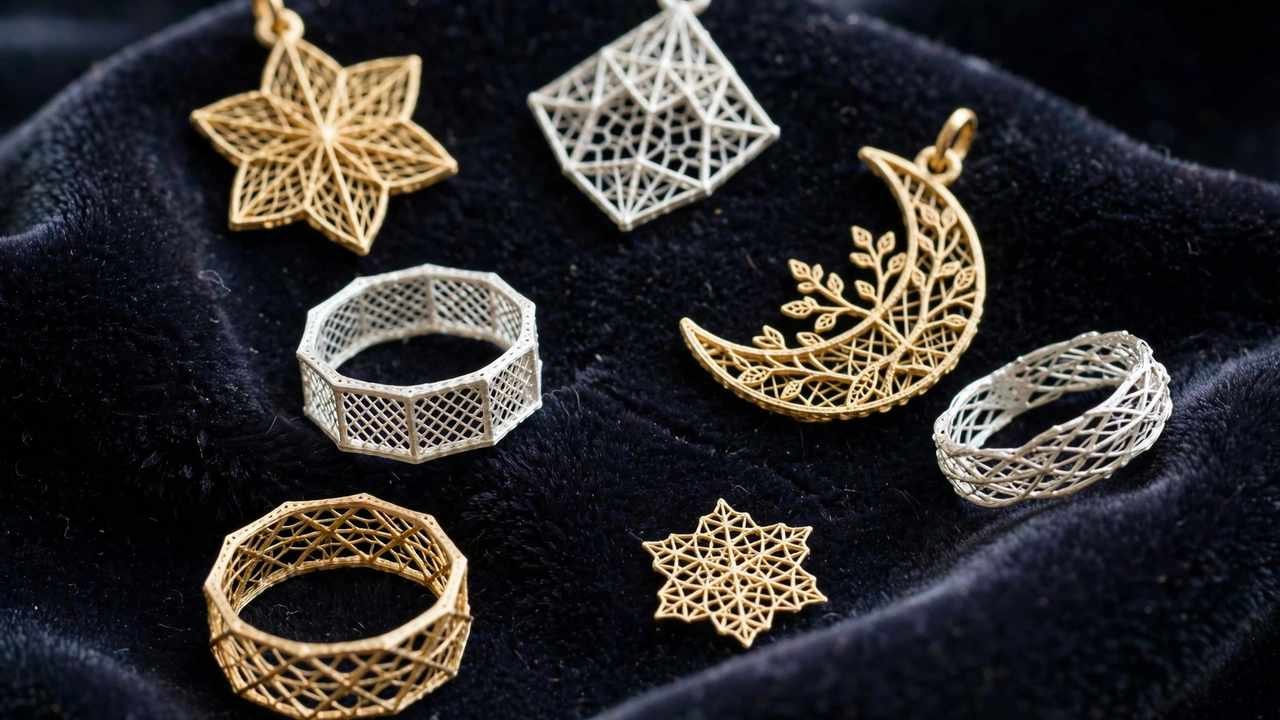
Finding the best 3D printer for jewellery making Australia has to offer starts with one blunt truth: for jewellery, resin printing wins and it’s not close. A filament printer lays down plastic in layers you can see; a resin printer cures detail down to tens of microns — fine enough for ring shanks, filigree, stone settings and textures that look cast, not printed. If your goal is pieces people will actually wear or sell, start with resin.
That doesn’t mean you just buy the cheapest resin printer and start printing rings. Jewellery has its own workflow — castable resins, wax burnout, metal casting — and the printer is only one part of it. This guide covers resin versus FDM honestly, the printers worth buying in Australia right now, which resins to use for castable pieces, what the whole setup costs, and where to buy locally.
Resin vs FDM for Jewellery: Why Resin Wins
Jewellery lives or dies on surface quality. A ring with visible layer lines looks handmade in the wrong way; customers expect the smooth, crisp finish of cast metal. Here’s how the two technologies compare for jewellery work specifically.
| Factor | Resin (MSLA) | FDM (filament) |
|---|---|---|
| Detail resolution | 18–35 microns per pixel — captures filigree, milgrain, engraving | 100–200 micron layers — layer lines visible on curved surfaces |
| Surface finish | Smooth straight off the printer after washing and curing | Needs sanding, filling and priming before it looks presentable |
| Castable materials | Castable wax resins designed for clean burnout | Very limited — standard filaments leave ash in casting |
| Smallest reliable features | Stone seats, prongs and fine textures print reliably | Features under ~0.5 mm are unreliable |
| Learning curve | Steeper — resin handling, washing, curing, ventilation | Gentler for complete beginners |
| Workspace needs | Ventilated area, wash and cure station, gloves | Just a desk |
The honest exception: FDM has a place in jewellery-adjacent work. Large display pieces, ring boxes, mandrel stands, polishing jigs and prototype mockups are all perfectly good FDM jobs. Some makers prototype a design cheaply in PLA on a filament printer, then print the final version in castable resin. But for the wearable piece itself, resin is the tool.
How Jewellery 3D Printing Actually Works: The Casting Workflow
Most 3D-printed jewellery isn’t worn as plastic — it’s cast in metal. Understanding this workflow matters because it dictates which printer and resin you need.
The standard process is lost-wax casting, the same technique jewellers have used for centuries, with a printed pattern replacing the hand-carved wax:
- Design or download the model. CAD software like Rhino with the MatrixGold plugin is the professional standard, but Blender, Fusion 360 and even Tinkercad work for simpler pieces. Printables and Cults host plenty of jewellery models to practise on.
- Print in castable resin. Castable resins (often called wax resins) are formulated to burn out of a plaster mould cleanly, leaving almost no ash — ash is the enemy, because it pits the surface of the cast metal.
- Wash and cure. The print is washed in isopropyl alcohol to remove uncured resin, then cured under UV light to fully harden it. A dedicated wash-and-cure station makes this consistent.
- Invest and burnout. The resin pattern is embedded in investment plaster, then the mould is heated in a kiln. The resin burns away, leaving a cavity in the exact shape of your design.
- Cast the metal. Molten silver, gold or bronze is poured or centrifugally cast into the mould. After cooling, the plaster is broken away and the metal piece is cleaned, polished and finished.
The burnout step is where resin choice matters most. Standard resins leave significant ash and expand when heated, cracking the mould. True castable resins — Siraya Tech Cast, BlueCast, PowerResins Wax — are engineered with high wax content specifically so they melt and burn out cleanly. Don’t try to cast with standard grey resin and hope for the best; the results will disappoint you.
If casting sounds like too much, there’s a simpler path: print directly in standard resin, cure it, and wear or sell it as a resin piece. Fashion jewellery, pendants and earrings in tough or flexible resin can look great and need no kiln. You can also electroform or plate resin prints. But for precious metal jewellery, casting is the real workflow.
Best 3D Printer for Jewellery Making Australia: Top Resin Machines
For jewellery you want high resolution (small pixel size), a reliable light source for consistent curing, and a build volume big enough for a full plate of rings — which doesn’t take much. These are the printers worth shortlisting, all available from Australian suppliers.
Elegoo Mars 5 — Best Value Starter
The Mars 5 is the sensible entry point. Its 6.6-inch 4K mono LCD delivers 35-micron pixels — plenty fine for rings, pendants and detailed charms — and it lists at around $399 AUD from Elegoo’s Australian store, with local shipping in 3–7 working days. Automatic levelling and a COB light source keep first-layer failures down, which matters when a failed print wastes expensive castable resin. If you’re testing whether jewellery printing is for you, start here; check current prices as they move with sales.
Elegoo Mars 5 Ultra — Best Detail per Dollar
Step up to the Mars 5 Ultra and you get a 9K screen with 18-micron pixels — the finest detail in this price bracket — plus tilt-release technology that makes delicate prints release from the film more gently. For filigree work and tiny stone settings, that extra resolution is visible in the final cast piece. It typically sits in the mid-$400s AUD locally. This is the sweet spot for serious hobby jewellers.
Anycubic Photon Mono M5s — Best for Speed and Volume
The Photon Mono M5s pairs a 12K screen (19-micron pixels) with a larger 200 x 125 x 210 mm build volume — useful if you’re printing whole batches of pieces or larger statement pendants. Its high-speed printing (around 105 mm/h with the right resin) shortens the iteration cycle when you’re refining a design. Expect to pay roughly $380–$400 AUD from Anycubic’s Australian store or local resellers. The M5s is a proven workhorse with a big community behind it.
Anycubic Photon Mono M7 — Best Premium Pick
If budget stretches further, the Photon Mono M7’s 14K screen (16.8-micron pixels) is currently among the sharpest consumer resin printers made, and its 223 x 126 x 230 mm volume handles serious batch production. At around $430 USD internationally (check the AU store for local pricing), it’s a premium machine — but for a small jewellery business where print quality directly affects what you can charge, the investment pays back in saleable output.
What About Bigger or Cheaper?
Ultra-cheap 2K resin printers still floating around online aren’t worth it for jewellery — the pixel size is too coarse for fine work, and you’ll see it in every cast. At the other end, large-format machines like the Photon Mono M7 Max are overkill unless you’re casting sculptural pieces or running production volumes. Match the printer to the work: jewellery is small, so resolution matters more than build volume.
Castable Resins: What to Buy
The printer gets the headlines, but the resin decides whether your castings succeed. For jewellery, you need a true castable (wax) resin, not standard modelling resin.
- Siraya Tech Cast — a well-regarded castable resin with clean burnout, popular with independent jewellers. Widely stocked by Australian resin suppliers.
- BlueCast — a long-standing jewellery-specific resin line with several formulations for different casting setups.
- PowerResins Wax — another jewellery-focused option designed for low ash and reliable burnout.
- Manufacturer castable resins — both Elegoo and Anycubic sell their own castable/wax resins tuned for their printers, which removes one variable when you’re starting out.
Expect castable resin to cost roughly $60–$100 AUD per litre locally — noticeably more than standard resin at $35–$55 a litre. It’s worth it: a failed casting wastes not just resin but your time, plaster, kiln energy and metal. For practice pieces and prototypes, print in cheap standard resin and save the castable stuff for final patterns.
For standard (non-cast) jewellery pieces — fashion pendants, earrings, prototypes — tough and ABS-like resins give you impact resistance that standard brittle resin lacks. If you’re printing wearable resin pieces, toughness matters more than ultimate detail.
The Full Setup: What Jewellery Printing Really Costs
The printer is about half the startup cost. Budget honestly for the whole workstation:
- Resin printer: $350–$600 AUD depending on model
- Wash and cure station: $150–$250 AUD (Elegoo Mercury or Anycubic Wash & Cure) — non-negotiable for consistent results
- Resins: $150–$250 to stock standard plus castable
- Safety gear: nitrile gloves, respirator with organic vapour cartridges, safety glasses — around $80–$120
- Consumables: isopropyl alcohol, filters, FEP film replacements, paper towels — $50–$100 to start
- Casting (if going that route): kiln access, investment plaster, crucibles — or partner with a local caster, which many beginners do
Realistic all-in startup: $700–$1,200 AUD for a resin printing setup, before casting equipment. Many beginners skip buying a kiln and instead send their resin patterns to a commercial casting service — several Australian jewellers’ suppliers offer casting from customer-supplied patterns, which keeps startup costs sane while you learn.
Where to Buy in Australia
Buy from Australian stockists for warranty support and faster shipping — resin printers are heavy, and returning one internationally is miserable. This is especially true when you’re buying the best 3D printer for jewellery making Australia suppliers stock — the LCD screen and FEP film are consumables you’ll eventually replace.
- Elegoo AU store (au.elegoo.com) — direct from the manufacturer, local shipping, frequent bundle deals with wash/cure stations and resin.
- Anycubic AU store (anycubic.au) — same deal for the Photon range.
- 3D Printer Superstore (Victoria) — authorised reseller for major brands, stocks printers, resins and accessories.
- Core Electronics (Newcastle, NSW) — strong on support and advice, good resin range.
- Jaycar — stocks a small range of printers and resin accessories in-store nationally, handy for urgent consumables like IPA and gloves.
Avoid grey-market imports for the printer itself. The saving is small, the warranty is effectively void, and resin printers have more failure-prone parts (LCD screens, FEP film) than filament machines — you’ll want local support eventually. The handful of dollars you save chasing the best 3D printer for jewellery making Australia grey-market sellers list isn’t worth losing local support on a resin machine.
Safety Is Not Optional with Resin
This deserves its own section because jewellery makers sometimes come from craft backgrounds where materials are benign. Resin isn’t.
- Ventilation: print in a ventilated room, garage or enclosure vented outside. Resin fumes and IPA vapour aren’t something to breathe all day.
- Skin contact: uncured resin is a skin sensitiser — repeated exposure can develop into an allergy that ends your resin printing entirely. Nitrile gloves every time you touch resin, the printer vat or a wet print. No exceptions.
- Respirator: wear one with organic vapour cartridges when pouring resin, cleaning the vat or working with IPA in quantity.
- Curing waste: never pour liquid resin or IPA wash down the drain. Cure waste resin in sunlight until solid, then dispose of it as solid waste. Let IPA evaporate or cure out the dissolved resin before disposal.
If you’re printing in a shared living space, an enclosure with extraction is worth building before you buy the printer. Your lungs and your housemates will thank you.
Best 3D Printer for Jewellery Making Australia: FAQs
Can I use a filament (FDM) printer for jewellery making?
You can for prototypes, display pieces and tooling, but not for finished wearable jewellery. FDM layer lines (100–200 microns) are visible on small curved pieces, and standard filaments don’t burn out cleanly for metal casting. Resin printers resolve detail down to 18–35 microns and support true castable wax resins.
What is the cheapest good resin printer for jewellery in Australia?
The Elegoo Mars 5 at around $399 AUD from Elegoo’s Australian store is the best-value entry point — 4K resolution is fine for rings and pendants, and it includes automatic levelling. Add a wash and cure station ($150–$250) to your budget; it’s essential, not optional.
What resin do I need to cast jewellery in silver or gold?
You need a true castable (wax) resin such as Siraya Tech Cast, BlueCast, or the manufacturer’s own castable resin. These are formulated with high wax content to burn out of the investment mould cleanly with minimal ash. Standard modelling resins leave ash that pits cast metal — don’t use them for casting patterns.
Do I need a kiln to make 3D printed jewellery?
Only if you’re doing your own metal casting. Many beginners print castable resin patterns and send them to a commercial casting service, which handles burnout and metal pouring for a fee. You can also make and sell resin jewellery directly with no kiln at all.
Is resin 3D printing safe to do at home?
Yes, with proper precautions: ventilate the printing area, wear nitrile gloves whenever handling uncured resin, use a respirator with organic vapour cartridges for pouring and cleaning, and never pour liquid resin or IPA down the drain. An enclosure with extraction is strongly recommended for shared living spaces.