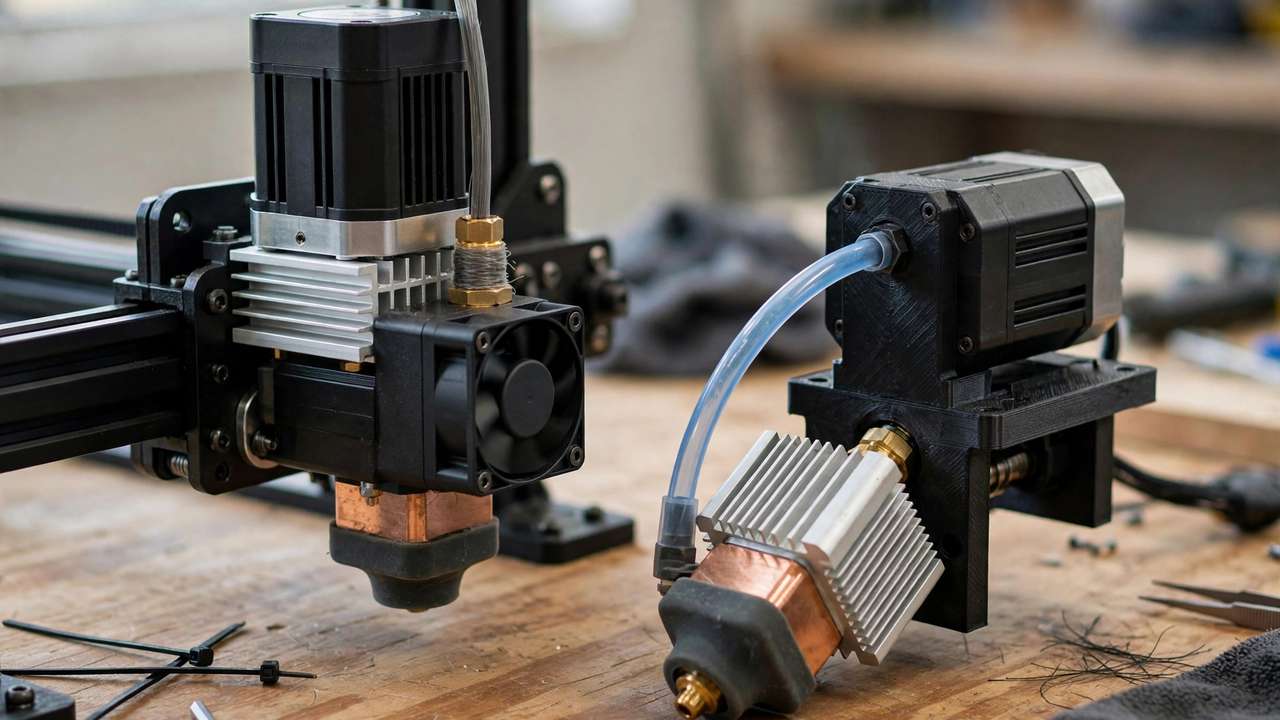
Every FDM 3D printer pushes filament through a hot nozzle — but how it pushes divides the hobby. In a direct drive extruder, the drive gears sit right above the hot end, gripping the filament millimetres from where it melts. In a Bowden setup, the extruder motor sits on the printer’s frame and pushes filament through a long PTFE tube to reach the hot end.
Both work. Both have passionate defenders. But they behave very differently with flexible filaments, at high speeds, and when something goes wrong. This direct drive vs Bowden guide breaks down the real-world differences so you can choose — or decide whether to convert.
Direct Drive vs Bowden: How Each System Works
Direct drive
The extruder assembly — motor, drive gears, and hot end — rides together on the print head carriage. Filament travels maybe 30–50mm from gear to melt zone. The classic example is Creality’s Sprite extruder on the Ender 3 S1 series (see our S1 vs S1 Pro comparison), and most modern printers from Bambu Lab, Prusa (MK4), and others use direct drive.
Bowden
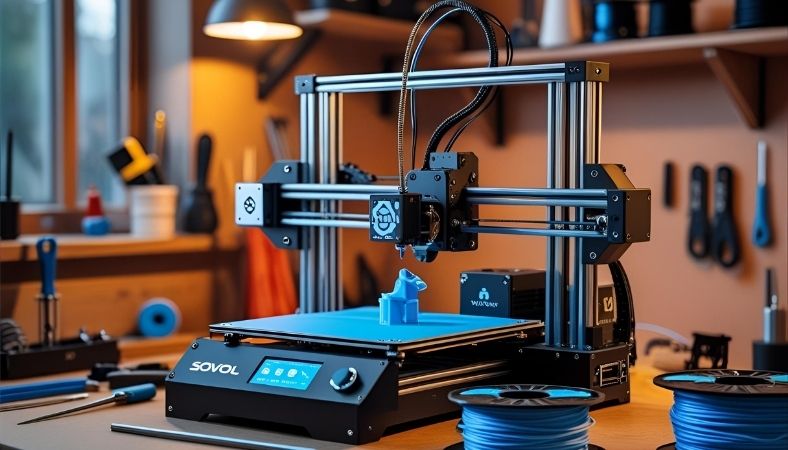
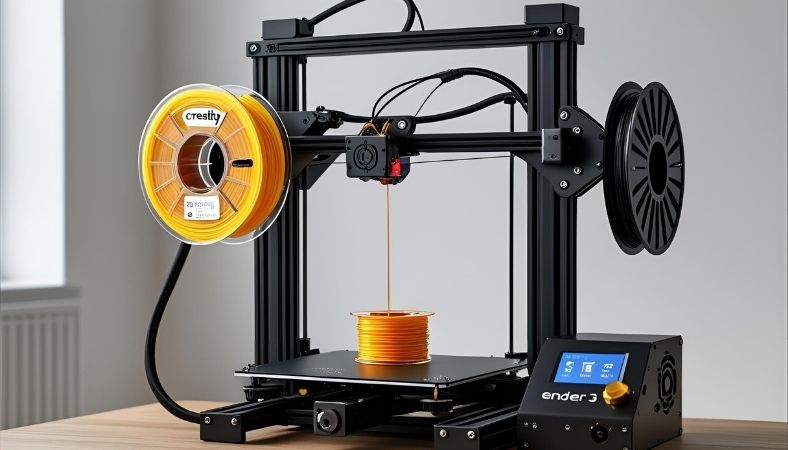
The extruder motor is fixed to the frame; filament travels through a PTFE Bowden tube (typically 300–600mm) to the hot end, which carries only the heater block and nozzle. The original Ender 3, Ender 3 V2, and many delta printers use Bowden. The print head is dramatically lighter — that’s the whole point.
Direct Drive vs Bowden: Head-to-Head Comparison
| Factor | Direct Drive | Bowden |
|---|---|---|
| Print head weight | Heavy (motor + gears + hot end) | Light (hot end only) |
| Flexible filament (TPU) | Excellent — short filament path | Difficult — filament buckles in tube |
| Retraction distance | 0.5–2mm | 4–7mm |
| Stringing control | Excellent | Good (needs tuning) |
| High-speed printing | More ringing/ghosting from mass | Less mass = cleaner at speed |
| Maintenance access | Everything in one place | Tube coupling wear point |
| Typical use | Modern all-rounders, flexibles | Speed-focused, lightweight gantries |
Flexible Filaments: Direct Drive’s Killer Advantage
This is the single biggest practical difference. TPU and other flexible filaments behave like wet noodles — push them through a 400mm tube and they buckle, fold, and jam. The 30mm path of a direct drive extruder handles even soft 85A TPU reliably.
Can you print TPU on Bowden? Yes — with caveats. Use harder TPU (95A+), print slowly (20–30 mm/s), minimize retraction, and consider upgrading to a Capricorn tube (tighter inner diameter reduces buckling room). But it’s fiddly. If flexibles matter to you — phone cases, gaskets, vibration dampers — direct drive saves enormous frustration. Our TPU printing guide covers the material side in depth.
Speed and Print Quality: Bowden’s Edge
Physics favours the lighter print head. A Bowden carriage might weigh 200g versus 400g+ for direct drive. Less mass means less inertia, which means less ringing (ghosting) on direction changes and cleaner results at high speeds. This is why speed-focused machines — Vorons, deltas, and many CoreXY builds — traditionally used Bowden or remote-drive systems.
The gap has narrowed: modern input shaping (Klipper, and now stock on many printers) compensates for the extra mass very effectively. A well-tuned direct drive printer with input shaping prints as fast and clean as Bowden for most practical purposes. But at the absolute bleeding edge of speed, lighter still wins.
Retraction: Shorter Is Better
Retraction pulls filament back to relieve pressure and prevent stringing. Direct drive needs only 0.5–2mm because there’s almost no molten filament column to retract. Bowden needs 4–7mm to account for the long tube’s springiness and the larger melt zone.
Longer retractions have consequences: more stringing risk if under-tuned, more heat-creep risk if over-tuned (each retraction drags heat upward), and slower print times on retraction-heavy models. Direct drive’s short, fast retractions are simply better behaved — one reason under-extrusion troubleshooting is often simpler on direct drive machines.
Maintenance Differences
Bowden’s weak point is the tube coupling and the tube-nozzle junction. The PTFE tube must sit perfectly flush against the nozzle; any gap collects molten plastic and causes jams. Couplers wear out, tubes degrade at high temperatures, and reassembly must be done hot. It’s a known maintenance ritual.
Direct drive’s weak point is heat creep — the motor’s warmth sits right above the heat break, and on hot days or long prints, heat can migrate upward and soften filament prematurely. Good part-cooling design mitigates this, but it’s the thing to watch.
Neither is maintenance-free; they just fail differently. Bowden fails at the tube junction, direct drive fails at heat management.
Should You Convert Bowden to Direct Drive?
The most common conversion in the hobby: putting a direct drive extruder (like the Sprite, Orbiter, or Sherpa Mini) on a Bowden printer. Worth it if:
- You want to print TPU reliably — the number one reason
- You’re tired of Bowden tube maintenance and stringing tuning
- Your printer’s frame is rigid enough for the extra mass (most are)
Skip it if your printer is dialled in and printing well — “if it ain’t broke” applies. Also note the weight penalty: on tall, skinny printers, the extra head mass can amplify Z-wobble. And you’ll need to recalibrate e-steps, retraction, and pressure advance after converting.
Conversion kits run $50–120 AUD depending on the extruder. The Orbiter v2 and Sherpa Mini are community favourites for lightweight direct drive (under 150g including motor), nearly eliminating the weight disadvantage.
The 2026 Landscape
The industry has voted: the vast majority of new printers ship direct drive. Bambu Lab, Prusa MK4/S, Creality’s S1 and K1 series, Anycubic’s Kobra line — all direct drive. Bowden survives mainly on ultra-budget machines and specialised speed builds. For anyone following the direct drive vs Bowden debate, that industry verdict is the strongest signal of all.
That said, “everyone does it” isn’t a technical argument. Bowden remains perfectly capable for PLA/PETG printing, and a well-tuned Bowden machine produces excellent results. Don’t upgrade a working printer just for fashion.
Hybrid Systems: Remote Direct Drive
The newest development blurs the categories: remote direct drive systems (like the Voron Stealthburner with Clockwork extruder, or Bambu’s approach) mount the extruder motor on the frame but drive the gears via a short flex shaft or place a lightweight extruder on the toolhead with the motor remotely located. You get direct-drive filament control with near-Bowden head weight.
These are enthusiast territory — not something you’ll find on a $300 printer — but they show where the industry is heading: the weight-vs-control trade-off is being engineered away. For most makers in 2026, though, the choice remains classic direct drive versus classic Bowden.
Conversion Walkthrough: Bowden to Direct Drive
If you’ve decided to convert, here’s the realistic process on a typical Ender 3-style printer:
- Choose your extruder: Orbiter v2.0 or Sherpa Mini for lightweight (~$80–120 AUD); Creality Sprite Pro for plug-and-play on Creality machines (~$100–140 AUD).
- Print the mount: Most kits need a printed adapter — print it before disassembling your working extruder.
- Remove the Bowden tube and old extruder. Keep the tube; it’s useful for filament guides.
- Mount the new extruder and reconnect wiring (usually just the stepper motor plug).
- Recalibrate everything: E-steps (the new extruder has a different steps/mm), retraction (drop to 0.5–1.5mm), pressure/linear advance, and Z-offset (the nozzle position changed).
- Test with PLA first before attempting TPU — confirm the basics work, then push into flexibles.
Total time: 2–3 hours including recalibration. Difficulty: moderate — if you’ve ever replaced a nozzle, you can do this.
Which Filaments Demand Which System
A practical cheat sheet:
- PLA: Either. The easiest filament prints beautifully on both.
- PETG: Either, slight edge to direct drive for stringing control.
- TPU 95A+: Direct drive strongly preferred; Bowden possible with tuning.
- TPU 85A and softer: Direct drive essentially required.
- ABS/ASA: Either — the enclosure matters far more than the extruder type.
- Nylon: Direct drive preferred (plus all-metal hot end and dry box).
- Carbon/glass-filled: Either, but budget for hardened nozzles regardless.
If your filament ambitions stop at PLA and PETG, the extruder debate barely matters — buy the printer with the better overall package. If flexibles or nylons are in your future, direct drive removes a whole category of frustration.
Extruder Maintenance: Side by Side
| Task | Direct Drive | Bowden |
|---|---|---|
| Nozzle changes | Same process | Same process |
| Cold pulls | Straightforward | Remove tube first |
| Gear cleaning | Easy access on toolhead | Easy access on frame |
| Tube replacement | N/A | Every 6–12 months ($5–10) |
| Coupler replacement | N/A | When grip weakens ($3–5) |
| Heat creep checks | Watch hotend fan closely | Less susceptible |
Neither system is maintenance-free, but Bowden has more consumable parts (tubes, couplers) while direct drive demands more attention to cooling. Pick your maintenance flavour.
Real-World Decision Guide
Still torn on direct drive vs Bowden? Answer these three questions:
- Do you print flexibles now or plan to within a year? Yes → direct drive. No → either works.
- Is your printer already dialled in and printing well? Yes → don’t fix what isn’t broken. No → consider direct drive during your next round of upgrades.
- Are you buying new or upgrading? Buying new → get direct drive (it’s the 2026 standard). Upgrading → convert only if TPU is the motivation.
For 90% of makers in 2026, the answer is direct drive — not because Bowden is bad, but because the industry standardized on direct drive and the ecosystem (profiles, mods, community knowledge) followed. Swimming with the current is easier than against it.
Whichever system you run, the fundamentals matter more than the architecture: a well-calibrated Bowden printer with fresh PTFE tube and tuned retraction will outperform a neglected direct drive machine every time. Maintain what you have, calibrate regularly, and let your filament choices — not forum debates — drive upgrade decisions. The best extruder is the one that’s dialled in.
Looking ahead, the extruder debate is quietly resolving itself. Lightweight direct-drive designs (Orbiter, Sherpa, Bambu’s toolheads) have shrunk the weight penalty to nearly nothing, while input shaping has tamed the ringing that remained. Within a few years, “Bowden vs direct drive” may sound as dated as “carbs vs fuel injection” — the better technology won, the transition just took a decade. If you’re buying a printer in 2026 or later, direct drive is simply the default.
Bowden’s Last Stand: Where It Still Makes Sense
Before direct drive’s victory lap, credit where due — Bowden remains the right choice in specific niches. Delta printers (like the FLSUN V400) use Bowden because the effector must stay featherweight for delta kinematics to work at speed. Some ultra-fast CoreXY builds use remote extruders for the same reason. And on the cheapest printers, Bowden keeps costs down — a $200 printer with Bowden prints PLA just fine, and that accessibility matters for the hobby’s growth.
The honest summary: Bowden isn’t obsolete, it’s specialised. For general-purpose making in 2026, direct drive is the default. For speed demons, delta owners, and extreme budget builds, Bowden still earns its place. Know which maker you are.
Whatever you choose, calibrate it properly — e-steps, retraction, and pressure advance make more difference than the extruder architecture itself.
Frequently Asked Questions
Is direct drive better than Bowden?
For most users, yes — direct drive handles flexible filaments far better, needs shorter retractions, and strings less. Bowden’s advantages (lighter head, slightly cleaner high-speed printing) matter mainly for speed-focused builds.
Can you print TPU on a Bowden extruder?
Yes, with limitations: use 95A or harder TPU, print at 20–30 mm/s, minimize retraction, and consider a Capricorn tube. Soft TPU (85A and below) is very difficult on Bowden — direct drive is strongly preferred.
What retraction settings for direct drive vs Bowden?
Direct drive: 0.5–2mm at 25–40 mm/s. Bowden: 4–7mm at 40–60 mm/s. Start in the middle of each range and tune with a retraction test print.
Does direct drive cause more ringing?
The heavier print head can increase ringing (ghosting), but modern input shaping compensates very effectively. On a tuned printer, the difference is negligible for most prints.
Should I convert my Ender 3 to direct drive?
If you want reliable TPU printing, yes — it’s the most worthwhile Ender 3 upgrade alongside a spring steel bed and auto-levelling. Budget $50–120 AUD for a quality extruder kit.
Choosing a printer with the right extruder from the start? Read our first printer guide and the Ender 3 S1 vs S1 Pro breakdown.