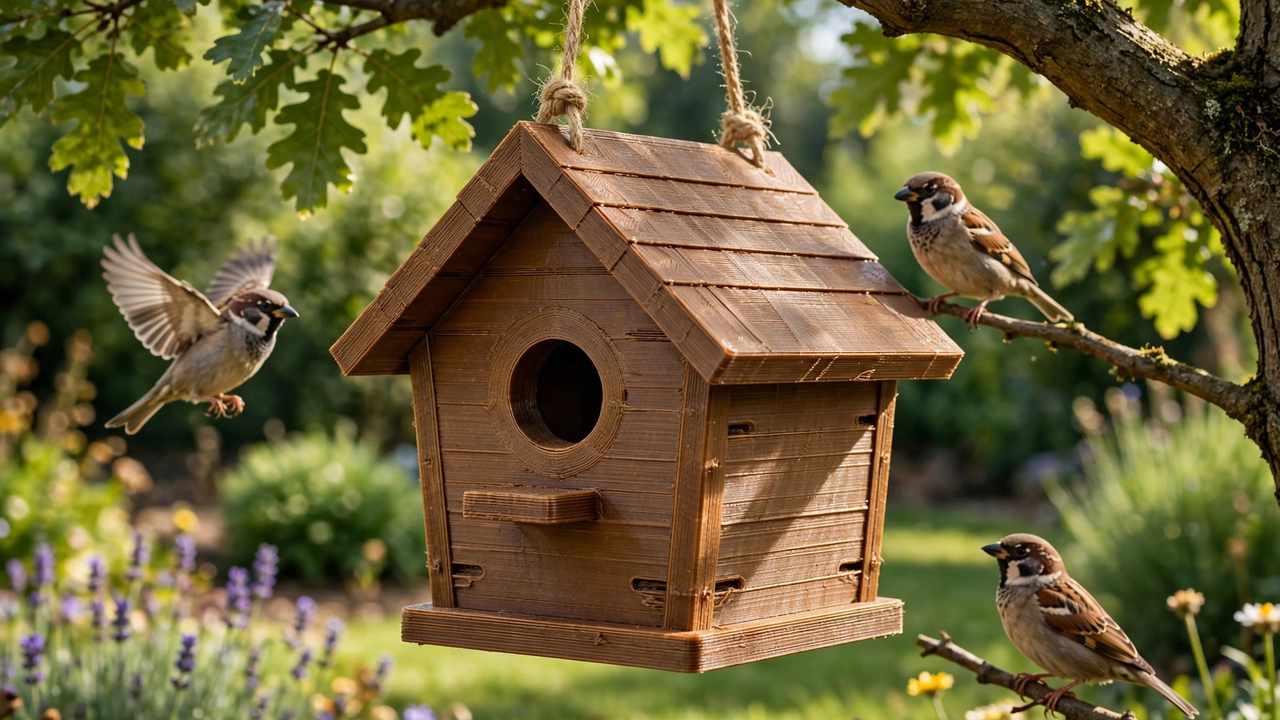
Your 3D printer can do more than make desk toys — it can build homes for wildlife. From 3D printed birdhouses to native bee hotels, bat boxes, and frog shelters, these projects combine making with genuine conservation impact. And they’re some of the most satisfying prints you’ll ever do: functional, outdoors, and used by living creatures.
This guide covers twelve wildlife projects with free STL files, the materials that are actually safe outdoors in Australia, and placement tips that determine whether your birdhouse gets tenants or stays empty.
Materials: What Survives Outside (and What’s Safe)
Outdoor prints face UV, rain, and heat — PLA’s three worst enemies. Material choice matters more here than almost anywhere else in 3D printing:
- PETG: The default for wildlife projects. Good UV resistance, handles rain, doesn’t soften until ~85°C. Safe and widely available.
- ASA: The upgrade pick — excellent UV resistance (it’s what car exterior parts are made from), very weatherproof. Needs an enclosure to print.
- Avoid PLA: It softens in Australian summer sun (60°C glass transition — a dark birdhouse in January easily exceeds that) and degrades in UV within a season or two. Heat failure is the number one reason cheap 3D printed birdhouses fall apart within a year.
- Avoid ABS for wildlife: Prints fine in ASA’s place, but has poorer UV resistance and the styrene content raises questions for enclosed nesting spaces.
Print wildlife structures with 3–4 walls and 15–20% infill — they need to survive wind, curious possums, and the occasional cockatoo demolition attempt. For more on material choice, see our filament comparison guide.
3D Printed Birdhouses: The Classic Projects
1. Classic Entrance-Hole Birdhouse (Australian Dimensions)
The standard: a box with a round entrance hole, sloped roof, and drainage. For Australian birds, entrance hole size selects your tenants: 32mm suits pardalotes and small thornbills, 40–45mm suits rosellas and small parrots, 60mm+ suits larger parrots and kookaburras. Print the hole size for the birds you want — or print interchangeable front panels with different holes.
Key design features to look for: ventilation gaps under the roof, drainage holes in the floor, an interior ladder (horizontal grooves) so chicks can climb out, and no perch (perches help predators, not tenants).
2. Modular Multi-Chamber Birdhouse
Stackable units that bolt together — start with one chamber, expand to a bird apartment block. Great for observing which orientations and heights different species prefer. Print in PETG; the modular joints need the dimensional stability.
3. Open-Front Nest Box (for Robins and Wrens)
Many Australian favourites — scarlet robins, superb fairy-wrens — prefer open-front boxes to enclosed holes. These are simpler prints (essentially a three-sided box with a roof) and a great first wildlife project. Mount in dense shrubs at 1–2m height.
Native Bee Hotels
4. Solitary Bee Hotel with Replaceable Tubes
Australia has 2,000+ native bee species, most of them solitary — and they’re extraordinary pollinators. A bee hotel provides nesting tunnels: look for designs with replaceable cardboard or bamboo tubes in 4–8mm diameters, since different species want different tunnel sizes. The printed frame holds the tubes and provides a roof.
Place facing north-east (morning sun), 1–2m off the ground, near flowers. Blue-banded bees — the ones that “buzz pollinate” tomatoes — are common tenants in eastern states.
5. Stingless Native Bee Hive (Tetragonula)
For the ambitious: printable hive boxes for Australian stingless bees (Tetragonula carbonaria). These are more complex — the hive needs specific internal volumes and a honey super design. Several open-source designs exist on Printables. Check your state’s regulations on keeping native bees; in Queensland they’re popular and legal for hobbyists.
Bat Boxes
6. Microbat Roosting Box
Australia’s microbats eat thousands of insects nightly — a single box can house a colony that patrols your whole street. Bat boxes are tall, narrow chambers with a landing strip below the entrance and rough interior surfaces for gripping. Mount 3–5m high on a pole or tree, facing north for warmth. Dark PETG or ASA absorbs heat, which bats love.
Be patient — bats can take a season or two to discover a new box. Once they do, they’re loyal tenants for years.
Frogs and Small Creatures
7. Frog Hotel (Burrow Pipes)
The viral “frog hotel” — vertical PVC-style pipes that frogs climb into during the day. Printable versions with decorative tops are all over Printables. Cluster 3–5 pipes of different heights in a shady, damp spot. Green tree frogs in particular love these, and they’re endlessly entertaining to check each morning.
8. Lizard Basking Shelter
Flat stacked-slab designs that create warm crevices for skinks and small lizards. Dark filament absorbs sun; the layered gaps provide hiding spots at different temperatures. Place near garden beds where insects congregate.
9. Insect Habitat Tower (“Bug Hotel”)
Multi-chamber towers with different fill materials — bark, straw, drilled wood blocks, pinecones — each attracting different beneficial insects. The printed frame is the easy part; filling it with natural materials is a great kids’ activity. Position near vegetable gardens for free pest control.
Feeders and Water
10. Hanging Bird Feeder (Squirrel-Resistant)
Weight-activated or cage-style feeders that admit small birds but defeat cockatoos and possums. Print in PETG — feeders take a beating. Note: in Australia, feeding native birds is debated; the consensus leans toward planting natives instead. But feeders for observing and photography are popular — just keep them clean to prevent disease.
11. Frog Pond / Water Dish with Ramp
A shallow dish with a textured escape ramp — critical, because smooth-sided containers trap and drown frogs and lizards. The ramp is the whole point. Sink it level with the ground in a shady spot and keep it topped up in summer.
12. Possum Nest Box
Ringtail and brushtail possums readily use nest boxes — 200mm+ entrance, spacious chamber, mounted 3m+ up a tree. If possums are in your roof, a nest box in the yard plus sealed entry points is the humane eviction strategy wildlife rescuers recommend.
Placing Your 3D Printed Birdhouses: The Difference Between Tenants and Emptiness
- Height: Small birds 2–4m, parrots 3–6m, bats 3–5m, possums 3m+. Higher is safer from cats.
- Orientation: Face entrances away from prevailing weather (in most of Australia, face north-east). Morning sun, afternoon shade.
- Predator protection: Metal predator guards on mounting poles, no perches on birdhouses, smooth pole sections cats can’t climb.
- Water nearby: Every wildlife project works better within 50m of water.
- Patience: Allow a full season. Animals are cautious of new structures — an empty box in month one is normal.
Safety and Ethics
Never use treated timber inserts, lead-based paints, or insecticide-adjacent materials near wildlife structures. If painting, use water-based exterior acrylics and let them cure fully (2+ weeks) before mounting. Clean nest boxes annually in late summer after breeding season — remove old nests to reduce parasites. And check local council rules: some areas restrict structures in street trees or reserves.
More Projects: 13–16
13. Native Bee Water Station
Bees drown in deep water. A shallow printed dish with landing pebbles or a textured ramp gives native bees safe drinking access. Place near flowering natives in summer — you’ll be amazed how quickly it’s discovered.
14. Owl Nest Box
Large hollow-dependent owls (powerful owls, barn owls) need big cavities — printable in sections and assembled. These are serious builds (300mm+ cubes) but address a genuine conservation need as old hollow trees disappear. Check with local wildlife groups for dimension specs; some councils run nest-box programs you can contribute prints to.
15. Reptile Hide (Ground Level)
Half-buried dome hides with a single entrance for blue-tongues and small snakes. Print in dark ASA for heat absorption, bury the rim 50mm, and place near rockeries. The thermal mass of the surrounding soil keeps interior temperatures stable.
16. Microbat “Rocket Box”
Tall cylindrical bat boxes (the “rocket box” design) house larger colonies than flat boxes and are a fun print — they stack in sections. Mount on a pole 4m+ high in an open flyway. Some Australian bat conservation groups publish tested dimensions; match them rather than improvising.
Seasonal Calendar for Wildlife Projects
- Late summer (Feb–Mar): Clean out nest boxes after breeding season. Print and mount new 3D printed birdhouses — birds scout territories in winter.
- Autumn (Apr–May): Install bee hotels before spring emergence. Set up frog hotels before the wet season.
- Winter (Jun–Aug): Peak printing season (you’re indoors anyway). Build owl boxes and possum boxes — nocturnal mammals seek winter shelter.
- Spring (Sep–Nov): Hands off! Breeding season — observe, don’t disturb. Top up water stations daily as temperatures rise.
- Summer (Dec–Jan): Water, water, water. Shallow dishes with ramps save lives in heatwaves. Check bee hotels for parasite buildup.
Getting Kids Involved
Wildlife printing is one of the best ways to get kids into making — the projects have real-world purpose, the prints are forgiving, and the payoff (a bird moving in!) is magical:
- Ages 5–8: Decorating printed birdhouses with non-toxic exterior paint, filling bug hotels with natural materials, checking frog hotels each morning.
- Ages 9–12: Choosing and slicing simple models, learning why entrance hole sizes matter, keeping a “tenant log” of visiting species.
- Teens: Designing original wildlife structures in Tinkercad, researching local species’ needs, presenting the project for school science.
The citizen-science angle is powerful: apps like iNaturalist let kids log the species their printed structures attract, contributing real biodiversity data. A 3D printer, a birdhouse, and a phone become a complete science project.
Documenting Your Wildlife Projects
Turn your prints into data. Keep a simple log: date installed, species observed, date of first tenancy, breeding success. Over seasons, you’ll learn which designs, orientations, and heights work in your yard — knowledge no generic guide can give you.
Share results with local wildlife groups and on maker forums. Photos of a pardalote using your printed nest box inspire ten more makers to print their own — the network effect of shared success is how backyard conservation scales. And if a design fails repeatedly, publish that too. Negative results save everyone time.
Your first wildlife print doesn’t need to be perfect — animals are far less critical of layer lines than we are. Print a simple open-front nest box in PETG this weekend, mount it facing north-east, and wait. Even basic 3D printed birdhouses get tenants if you place them well. When the first tenant moves in, you’ll understand why this corner of the hobby has such devoted followers. The printer stops being a toy and becomes a tool for something bigger.
Consider joining your local Landcare or wildlife rescue group — many run nest-box monitoring programs and welcome maker contributions. A 3D printer owner who can produce boxes to spec is genuinely valuable to these organisations, and the feedback from experienced ecologists will improve your designs faster than any forum. Making becomes conservation, and conservation gives your making purpose.
Start with PETG, pick one project, and mount it well — placement matters more than print quality. The wildlife doesn’t care about your layer lines; it cares about safety, shelter, and water. Get those right and the tenants will come.
Frequently Asked Questions
What filament is safe for 3D printed birdhouses?
PETG is the best all-round choice — UV-resistant, waterproof, and safe. ASA is even better for harsh sun. Avoid PLA outdoors (softens in heat, degrades in UV) and be cautious with ABS near nesting chambers.
What size entrance hole for Australian birds?
32mm for pardalotes and thornbills, 40–45mm for rosellas and small parrots, 60mm+ for larger parrots and kookaburras. Hole size selects your tenants and excludes larger predators.
How high should I mount a birdhouse?
2–4m for small birds, 3–6m for parrots. Higher is safer from cats. Face entrances north-east for morning sun and weather protection.
Do 3D printed bee hotels work?
Yes — print the frame and roof in PETG/ASA, but use natural replaceable tubes (cardboard or bamboo, 4–8mm) for the actual nesting tunnels. Different native bee species want different diameters.
How long until animals use a new nest box?
Often a full season. Animals are cautious of new structures. Position correctly, be patient, and don’t disturb the box while waiting.
More outdoor printing ideas in our printed gifts roundup — and keep your filament performing with proper dry storage.