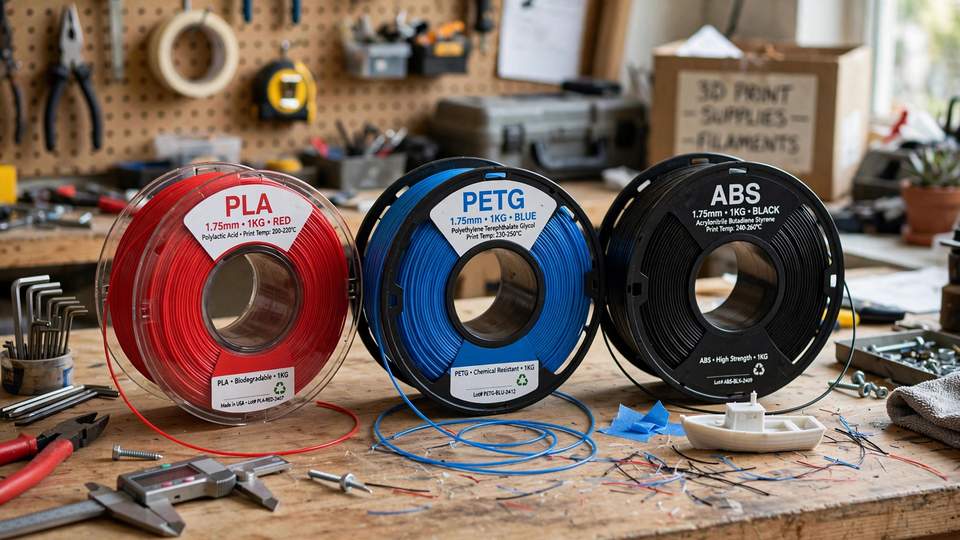
Learning how to dry wet filament is one of those skills that separates frustrated beginners from makers who get consistent, beautiful prints. If your prints have suddenly started stringing, popping, or looking rough for no apparent reason, moisture is the prime suspect — and in Australia’s humid climate, it’s a suspect with means, motive, and opportunity.
This guide covers how to tell if your filament is wet, the exact temperatures and times to dry every common material, and how to store filament so it stays dry in everything from Darwin’s wet season to a steamy Brisbane summer.
How to Dry Wet Filament: Why It Absorbs Moisture (and Why Australia Is Worse)
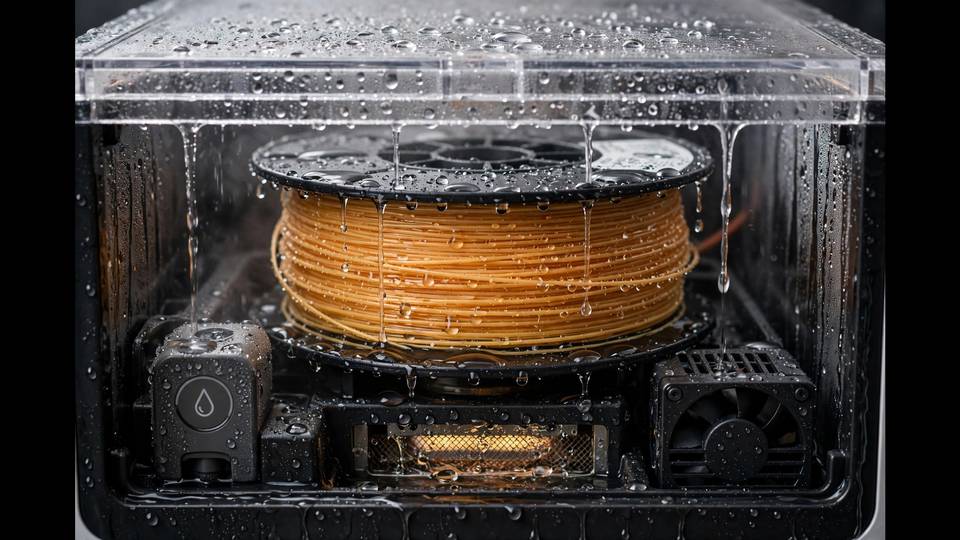
Most 3D printing filaments are hygroscopic — they pull water molecules straight out of the air. Some are worse than others: nylon can absorb measurable moisture in under a day in humid conditions, while PLA is slower but absolutely not immune. Once that moisture hits the 200°C+ hotend, it turns to steam instantly, and that steam is what wrecks your prints.
Australia makes this harder than it needs to be. Coastal cities like Sydney, Brisbane, and the Gold Coast regularly sit above 60–70% relative humidity. The tropical north — Darwin, Cairns — is worse still, especially through the wet season. Even Melbourne and Adelaide get humid stretches. If your filament lives on an open spool rack in these conditions, it’s absorbing moisture from the moment you open the vacuum bag.
The cruel part: filament can look perfectly fine and still be wet enough to ruin a print. You can’t see moisture. You can only see what it does.
Learning how to dry wet filament starts with recognising the symptoms — stringing, popping and rough surfaces all point to moisture.
Signs Your Filament Is Wet
Before you start drying, confirm the diagnosis. Wet filament typically shows one or more of these symptoms:
- Popping or sizzling sounds from the nozzle as water flashes to steam
- Excessive stringing — fine hairs between parts of the print that weren’t there before
- Rough, bubbly surface finish — tiny craters or a frosted texture on walls
- Brittle filament — PLA that snaps when you bend it instead of flexing (a classic sign)
- Weak layer adhesion — parts that delaminate or feel fragile
- Inconsistent extrusion — the extruder seems to surge and starve
- Reduced clarity in translucent PETG
If a spool printed beautifully when new and now misbehaves after weeks on the shelf, moisture is the most likely culprit — especially for PETG and nylon, which drink humidity far faster than PLA.
How to Dry Wet Filament: Drying Temperatures and Times (Complete Chart)
Different materials need different heat. Too cool and the moisture stays put; too hot and you’ll soften or fuse the spool. These are the widely agreed ranges used by filament manufacturers:
- PLA: 45–55°C for 4–6 hours
- PETG: 60–65°C for 4–6 hours
- TPU: 40–50°C for 4–6 hours
- ABS / ASA: 65–80°C for 4–6 hours
- Nylon (PA): 70–80°C for 8–12 hours (nylon holds moisture the most stubbornly)
- Polycarbonate: 70–80°C for 6–12 hours
Very wet spools — say, nylon that’s been open through a Darwin wet season — can need up to 24 hours. When in doubt, dry longer rather than hotter. And always let the spool cool completely before printing or sealing it away; warm filament in a sealed bag just re-traps condensation.
One safety note: drying involves sustained heat, so do it in a ventilated area, keep the setup away from anything flammable, and never leave an oven-based dry completely unattended.
Once you know how to dry wet filament, keeping it dry matters just as much — sealed storage with desiccant prevents re-absorption.
Method 1: Dedicated Filament Dryer (Best Option)
A purpose-built filament dryer is the safest and most effective way to dry filament. These are insulated boxes with a heater, fan, and usually a humidity readout, designed to hold one or two spools. Many let you feed filament directly to the printer while drying — ideal for moisture-hungry materials like nylon and TPU that reabsorb humidity during long prints.
Set the temperature for your material, load the spool, and let it run for the recommended time. The built-in hygrometer tells you when the chamber humidity has dropped, which takes the guesswork out. Entry-level single-spool dryers start around AUD $50–$80 from AU resellers; dual-spool and print-through models cost more but pay for themselves if you print engineering materials regularly.
If you print a lot of PETG, ABS, or nylon in a humid part of Australia, a dryer isn’t a luxury — it’s as essential as the printer itself.
Method 2: Food Dehydrator (Best Budget Option)
The classic maker hack: a cheap food dehydrator from Kmart or Big W does a surprisingly good job. Dehydrators are designed to hold steady, low temperatures with fan circulation — exactly what filament drying needs. They’re gentler than ovens, with fewer temperature swings, which makes them safer for PLA and TPU.
Remove the food trays, fit the spool inside (check that your spool diameter fits before buying — some 2kg spools won’t), and set the temperature per the chart above. Most dehydrators top out around 70–75°C, which covers PLA, PETG, TPU, and ABS fine, but is borderline for nylon’s ideal range.
Two practical notes: don’t use the same dehydrator for food and filament without thorough cleaning (cross-contamination isn’t something you want in either direction), and dehydrators are more energy-efficient than ovens for this job. For a deeper dive on the method, Siraya Tech’s wet filament guide covers symptoms and solutions across materials.
Method 3: Your Kitchen Oven (Use With Caution)
An oven works in a pinch, but it’s the riskiest method. Most kitchen ovens can’t hold a steady 50°C — they swing wildly, and a 20-degree overshoot will soften PLA into a fused mess or warp the spool itself. Only attempt this if your oven can genuinely hold low temperatures (many can’t go below 70–80°C, which rules out PLA and TPU entirely).
If you do use an oven: verify the real temperature with an oven thermometer first, use the lowest possible setting, prop the door slightly ajar to bleed excess heat, and check the spool every 30 minutes. Never leave it unattended. Honestly? For the price of a cheap dehydrator, the oven method isn’t worth the risk to a $35 spool of filament.
Method 4: Your 3D Printer’s Heated Bed (The Free Option)
Here’s one a lot of guides skip: your printer’s heated bed is a low, controllable heat source. Place the spool on the bed, set it to the right temperature (say 55°C for PLA), cover the spool with a cardboard box or large pot to trap the warmth, and leave it for several hours. It’s slow and a bit fiddly, but it costs nothing and the temperature control is far better than most ovens.
This works best as a maintenance dry for mildly damp PLA or PETG rather than a rescue for a soaked spool of nylon. Still, it’s a handy trick when you need a quick refresh before an important print.
Storing Filament in Australia’s Climate
Drying is only half the battle. An opened spool in Brisbane air starts reabsorbing moisture immediately, so proper storage is what keeps you from drying the same spool every month.
- Airtight containers with desiccant are the gold standard. Large cereal containers or IKEA SAMLA boxes with a gasket seal work brilliantly — toss in rechargeable silica gel beads and a cheap hygrometer so you can see the humidity inside.
- Vacuum bags (the clothes-storage kind, or purpose-made filament bags with a valve) are excellent for spools you won’t touch for months. Squeeze the air out, add a desiccant pack, seal.
- Keep spools out of the garage if you can. Australian garages swing wildly in temperature and humidity — condensation forms on the filament when temperatures shift, soaking the outer layers.
- Print from a dry box for long prints in humid weather. Even perfectly dried filament reabsorbs moisture during a 20-hour print with the spool sitting in open air. A dry box with a feed port solves this.
- Recharge your desiccant. Silica gel beads go from orange to green (or blue to pink) when saturated — dry them in the oven or dehydrator and they’re good as new.
Aim to keep stored filament under 20–30% relative humidity inside the container. Sealed properly with fresh desiccant, filament lasts for years; left on an open rack in Cairns, some materials go off in weeks.
What About Printing in High Humidity?
Sometimes you can’t wait for perfect conditions. If you must print while it’s humid:
- Dry the spool immediately before printing, not the night before
- Prefer PLA over PETG — it’s more forgiving of ambient moisture
- Keep the room as climate-controlled as you can (aircon running helps enormously)
- For critical prints, feed directly from a dryer or dry box
- Accept that nylon and polycarbonate in a humid room without a dry box is asking for heartbreak — save those for dry days
It also helps to keep your printer itself maintained — a partially clogged nozzle or worn PTFE tube makes moisture symptoms worse. Our printer maintenance schedule walks through the routine that keeps everything running sweetly.
Choosing a Filament Dryer in Australia
If you’re buying a dryer locally, here’s what to look for. Single-spool dryers are the cheapest entry point and fine if you mostly print PLA and PETG. Dual-spool or larger units make sense if you run multiple materials or print engineering filaments regularly.
Key features worth paying for: a visible humidity/temperature readout (so you’re not guessing), a maximum temperature of at least 70°C (for nylon), and — the big one — the ability to feed filament to the printer while drying. That last feature turns the dryer into a dry box, which as we’ve covered is the real endgame for humid climates.
Check that the unit runs on Australian 230V mains — most dedicated dryers sold by AU resellers do, but grey-market imports occasionally don’t. And measure your spools: some compact dryers struggle with wider 2kg rolls or cardboard spools that have swollen slightly with moisture.
Don’t overthink the brand. The technology is simple — a heater, a fan, and a box. Even budget models do the core job well. Spend the savings on an airtight storage tub and a kilo of rechargeable desiccant beads, which matter just as much.
Troubleshooting: When Drying Doesn’t Fix It
Sometimes you dry the spool and the prints still misbehave. Before you blame the filament again, check these:
- Partially clogged nozzle mimics wet-filament symptoms — inconsistent extrusion, rough walls. A cold pull or nozzle swap is a cheap test.
- Worn PTFE tube in the hotend causes similar issues, especially with PETG at higher temperatures.
- Wrong drying temperature — drying PLA at 70°C can crystallise it and make it brittle, which looks like moisture damage but is actually heat damage. Stick to the chart.
- The spool was never the problem — a draughty room, a warped bed, or a slicer profile change can all masquerade as wet filament. Change one variable at a time.
- Old filament degrades — filament that’s years old, especially PLA stored badly, can break down at a chemical level. No amount of drying fixes expired plastic. When a spool is truly done, let it go.
The systematic approach: dry the spool properly, print a small test (a calibration cube or a temperature tower), and compare against the same test from when the spool was new. If the test print is clean, your problem is solved — and you’ll know exactly what fixed it next time.
Frequently Asked Questions
How do I know if my filament is wet?
Listen for popping or sizzling at the nozzle, look for excessive stringing, rough bubbly surfaces, or PLA that snaps instead of bending. If a spool printed fine when new and misbehaves after weeks open, moisture is the likely cause.
What temperature do I dry PLA filament?
Dry PLA at 45–55°C for 4–6 hours in a filament dryer or food dehydrator. Don’t use a hot oven — most can’t hold temperatures this low and you’ll melt the spool.
Can I dry filament in the oven?
You can, but it’s risky. Most ovens can’t hold a steady low temperature and overshooting will ruin PLA or TPU. A cheap food dehydrator is safer, more consistent, and more energy-efficient.
How long does dried filament stay dry?
In open Australian coastal air, days to weeks depending on the material — nylon can go off in under a day in high humidity. Sealed in an airtight container with desiccant, it stays dry for years.
Does wet filament cause stringing?
Yes — moisture turning to steam in the hotend is one of the most common causes of stringing, along with popping sounds and rough surfaces. Drying the spool usually fixes it immediately.