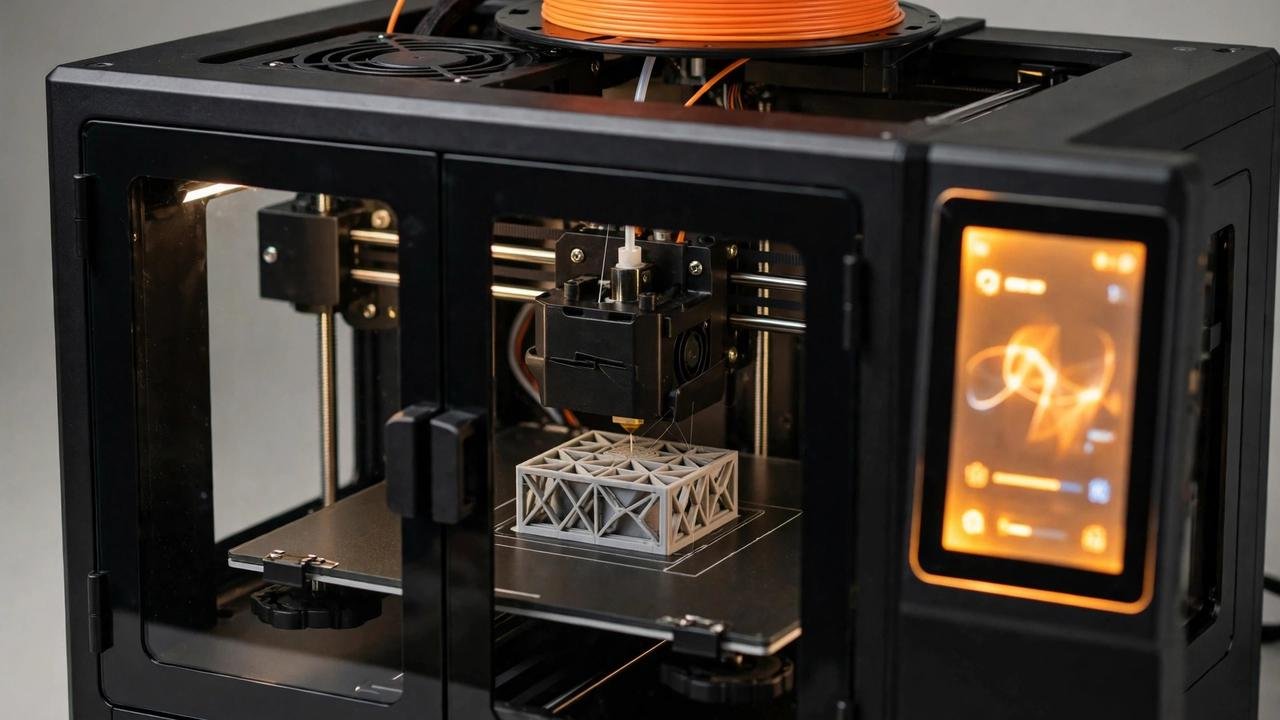
The Anycubic Kobra 3 review Australia makers keep asking for has been a long time coming — and for good reason. When it launched in mid-2024, the Kobra 3 was Anycubic’s answer to a market that had changed almost overnight: a CoreXY multicolour printer, sold with a 4-spool filament dryer called the ACE Pro, at a price that undercut Bambu Lab by a serious margin. Two years on, the firmware has matured, the early bugs are mostly squashed, and the question for 2026 is a simple one: does it still earn a spot on your bench, or has the competition moved past it?
This is written for the Australian buyer in 2026 — local pricing, local stock, and the things that matter when the machine sits in your garage through January. We’ll cover print quality, speed, the ACE Pro multicolour system, software, reliability, and how it stacks up against the Bambu Lab A1.
Anycubic Kobra 3 Review Australia: Specs at a Glance
Before the opinions, the facts. Here’s what the Kobra 3 brings to the table:
| Spec | Anycubic Kobra 3 |
|---|---|
| Motion system | CoreXY |
| Build volume | 250 x 250 x 260 mm |
| Max print speed | 600 mm/s |
| Max acceleration | 20,000 mm/s² |
| Hotend | Direct drive, up to 300 °C |
| Auto-levelling | LeviQ 3.0 automatic |
| Multicolour | ACE Pro (4 spools, active drying) |
| Claimed noise | ≤ 65 dB (standard mode) |
| Extras | Filament runout, tangle and clog detection |
On paper, that’s a genuinely strong spec sheet for the money. The CoreXY motion system is the headline — the bed only moves down in Z, so the heavy lifting is done by a light toolhead. That means less wobble at speed than a bed-slinger of the same size — the same motion architecture as machines costing far more.
Design and Build Quality
The Kobra 3 looks like a printer from 2026 rather than 2021, which matters more than it sounds. The frame is rigid aluminium extrusion, the cable management is tidy, and the whole machine feels put-together in a way that older budget CoreXY kits never did. Assembly is mostly done out of the box — you’re bolting on the gantry and a few accessories, not building a machine from a bag of screws. This is the kind of real-world build detail that matters most in an Anycubic Kobra 3 review Australia readers can actually use — specs tell you the numbers, but living with the machine tells you the rest.
The toolhead carries a direct-drive extruder and a 300 °C hotend — PLA, PETG, TPU, ABS, ASA, and lower-temp nylons are all on the table. The PEI spring-steel build plate is genuinely good: parts stick when hot and release with a flex when cool. If you’re comparing materials, our PLA vs PETG vs ABS filament guide breaks down what each costs and behaves like in Australian conditions. If you’re weighing this machine against others in your Anycubic Kobra 3 review Australia shortlist, the 300 °C hotend puts a surprising range of materials in reach for the price.
Fit and finish is a clear step up from Anycubic’s older Kobra line. Panel gaps are tight, the touchscreen is responsive, and the machine doesn’t rattle at speed. It’s not at Bambu’s level of polish — the screen UI is functional rather than delightful — but nothing about it feels cheap where it matters. Long-term reliability is the question every Anycubic Kobra 3 review Australia shoppers ask first, and on that front this machine is holding up better than its predecessors.
Print Quality: Where It Shines
Here’s the part most reviews dance around: the Kobra 3 prints well. Properly dialled in, PLA comes off the bed with clean walls, sharp corners, and overhangs that hold up to about 60 degrees without support. PETG is equally happy. The LeviQ 3.0 auto-levelling does its job — first layers go down flat and even, which is where most failed prints are born.
At sane speeds (150–250 mm/s for quality work), dimensional accuracy is good enough for functional parts: holes come out round, threads print, and press-fit joints behave. Push it to the headline 600 mm/s and you’ll see what every printer shows at its limit — slightly softer corners and more visible ringing on glossy surfaces. That’s normal physics, not a flaw. The honest speed story is the same as every printer in this class: the machine can hit 600 mm/s, but your best-looking prints happen well below it.
Out of the box, default profiles give good rather than amazing results. Spend an hour on calibration — flow rate, pressure advance, a temperature tower for your go-to filament — and it settles into being a genuinely reliable workhorse. That hour pays for itself many times over.
The ACE Pro: Multicolour With a Built-In Dryer
The ACE Pro is the Kobra 3’s party trick, and it’s the reason most people buy the Combo. It’s a 4-spool unit that does two jobs: it feeds up to four colours into the printer for multicolour prints, and it actively dries your filament while it sits there — heated drying with circulation, not just a sealed box with desiccant.
The drying side is the genuinely useful half. Anyone printing in a humid Australian summer knows what wet filament does: stringing, popping, rough surfaces, brittle PLA that snaps in the extruder. Storing your spools in the ACE Pro at 45–55 °C keeps PLA and PETG in printable condition between jobs, and it noticeably improves reliability on long prints. This alone justifies the Combo for a lot of buyers, even if they rarely print in four colours.
The multicolour side needs honest framing. The ACE Pro feeds filament through a single tube into the printer, swapping spools one at a time. Every colour change means a purge — the printer spits out the old colour before loading the new one. On a model with hundreds of colour swaps per layer, that adds real time and real waste; a prime tower and purge poop pile up fast. This is true of every single-nozzle multicolour system, including Bambu’s AMS, but it’s worth knowing before you imagine printing full-colour figurines at the same speed as single-colour parts.
Also worth knowing: RFID spool recognition only works with Anycubic’s own filament — third-party spools feed and dry fine, you just select the material manually. Early firmware had feed-jam teething issues, but updates through 2025 sorted most of them. By 2026 it’s a dependable unit, though the drying fan makes it the noisiest part of the setup.
Software: AnycubicSlicer Next and the App
AnycubicSlicer Next is built on OrcaSlicer, which is good news — it means the profiles, calibration tools, and workflow will feel familiar to anyone coming from another modern printer, and the open OrcaSlicer community’s knowledge applies directly. Default profiles for the Kobra 3 are solid, and remote monitoring through the phone app works well enough for checking on a print from the couch.
The usual cloud caveats apply: the smoothest experience runs through Anycubic’s cloud, which needs an account and internet. LAN mode exists with some features reduced — the same trade-off Bambu owners make. Decide how you feel about it before you buy, not after.
Noise, Reliability, and Living With It
Anycubic claims 65 dB or less in standard mode, and in practice the Kobra 3 sits mid-pack for noise — quieter than old bed-slingers, but not silent. The part-cooling fan and the ACE Pro’s drying fan make themselves known. In a spare room or garage it’s a non-issue; on the desk next to you while working from home, you’ll hear it.
Reliability in 2026 is the Kobra 3’s quiet success story. The launch-era complaints — ACE Pro feed issues, the odd firmware quirk, first-layer inconsistency on early units — have largely been addressed through firmware updates and small hardware revisions. The clog, tangle, and runout detection actually work, which saves prints rather than just announcing their funerals. Maintenance is straightforward: nozzles are standard and cheap, the PEI plate lasts well, and there’s nothing proprietary about the consumables.
If you do run into extrusion problems down the track, our guide to fixing heat creep and clogs walks through diagnosis and repair step by step — most of it applies directly to the Kobra 3’s hotend.
Kobra 3 vs Bambu Lab A1: The Honest Australian Comparison
This is the comparison every Australian buyer actually makes, so let’s do it properly:
| Anycubic Kobra 3 Combo | Bambu Lab A1 Combo | |
|---|---|---|
| Motion system | CoreXY | Bed-slinger (Cartesian) |
| Build volume | 250 x 250 x 260 mm | 256 x 256 x 256 mm |
| Max speed | 600 mm/s | 500 mm/s |
| Multicolour | ACE Pro (4 colours + active drying) | AMS Lite (4 colours, no drying) |
| Slicer | AnycubicSlicer Next (Orca-based) | Bambu Studio (Orca-based) |
| Ecosystem polish | Good, still maturing | Excellent, best in class |
| Typical AU price | Lower — check current sales | Higher — check current sales |
The A1 wins on polish, full stop. Bambu’s software, calibration automation, app experience, and out-of-the-box consistency are the benchmark the whole industry is chasing, and the Kobra 3 hasn’t caught up there. If you want the printer that asks the least of you, the A1 is still the answer.
The Kobra 3 wins on hardware value and the dryer. CoreXY at this price is genuinely unusual, and the ACE Pro’s active drying is something Bambu doesn’t offer in this bracket — the AMS Lite is just a feeder. For an Australian garage hitting 80% humidity in February, dry filament on tap is a practical advantage. And the Kobra 3 Combo typically sells for meaningfully less than the A1 Combo in Australia.
Think of it this way: the A1 is the better appliance, the Kobra 3 is the better deal. Neither is the wrong choice.
Who the Kobra 3 Is For (and Who Should Skip It)
Buy it if: you want multicolour capability plus filament drying in one purchase; you like CoreXY hardware and print at speed; you’re comfortable spending an hour calibrating; or the price gap to the A1 Combo matters to your budget.
Skip it if: you want the absolute most hands-off first printer and don’t mind paying Bambu’s premium for it; you print mostly single-colour and already own a separate dryer (the printer-only Kobra 3 is fine, but the Combo’s value proposition weakens); or you need a fully enclosed machine for ABS and ASA — the Kobra 3 is open-frame, and engineering filaments still want an enclosure.
Buying the Kobra 3 in Australia
In Australia, the Kobra 3 Combo usually lands in the mid-hundreds of AUD, with the printer-only version a couple of hundred less — but Anycubic runs aggressive sales, so the street price moves around a lot. Check Anycubic’s official AU store first for current pricing and local warranty terms, then compare with Australian resellers like 3D Printer Superstore and Core Electronics, which sometimes bundle filament or offer local servicing that’s worth a small premium.
Avoid grey-market imports to save a few dozen dollars. On a machine with a heated dryer and a 300 °C hotend, Australian consumer warranty protection is worth more than a small discount — return shipping on a 15 kg printer erases any saving the first time something goes wrong.
Verdict: Worth It in 2026?
Yes — with the right expectations. The Anycubic Kobra 3 in 2026 is a fast CoreXY printer with genuinely useful multicolour-plus-drying hardware, at a price that undercuts its main rival by enough to matter. Multicolour printing is slower and more wasteful than marketing suggests on every machine in this class, but for an Australian maker who wants speed, colour, and dry filament in one box, it’s one of the strongest deals in 3D printing right now.
For official specs, Anycubic’s Kobra 3 product page is the authoritative reference — worth checking before you buy, since specs and bundles change.
FAQs
Is the Anycubic Kobra 3 good for beginners in Australia?
Yes, with a small caveat. Assembly is minimal, LeviQ 3.0 auto-levelling handles the bed, and default profiles print well. Absolute beginners who want zero tinkering may still prefer the Bambu A1’s extra polish, but the Kobra 3 is far from a difficult machine to start on.
How much does the Anycubic Kobra 3 cost in Australia?
Pricing moves with sales. The Combo with the ACE Pro typically sits in the mid-hundreds of AUD on Anycubic’s AU store, with the printer-only version a couple of hundred dollars less. Always check the current price before buying, and compare local resellers for bundles. For Australian launch news and whether new releases are actually worth the money, ItsReleased tracks new products, local prices and honest verdicts. For Australian launch news and whether new releases are actually worth the money, ItsReleased tracks new products, local prices and honest verdicts.
Is the ACE Pro worth it, or should I buy the printer only?
The ACE Pro is worth it for most buyers. The active filament drying alone improves reliability in humid Australian conditions, and 4-colour printing is genuinely fun even with the purge waste. Buy printer-only only if you already own a good dryer and have no interest in multicolour.
Kobra 3 or Bambu Lab A1 — which should I buy?
Buy the A1 if you want the most polished, hands-off experience and don’t mind paying more. Buy the Kobra 3 if you want CoreXY speed, built-in filament drying, and a lower price. Print quality on single-colour parts is close between them once calibrated.
Can the Kobra 3 print ABS and ASA?
The 300 °C hotend can handle them, but the Kobra 3 is an open-frame printer and ABS/ASA warp badly in drafts. You’ll get far better results with an enclosure. For PLA, PETG, and TPU it needs nothing extra.
Does the ACE Pro work with third-party filament?
Yes. Any standard 1.75 mm spool feeds and dries fine. The only limitation is RFID auto-recognition, which works with Anycubic filament only — with other brands you select the material manually in the slicer.