HIPS filament — High Impact Polystyrene — is one of 3D printing’s most underrated materials. Most makers know it as “that dissolvable support stuff,” but it also prints beautifully as a standalone material for lightweight, matte-finish parts. In this HIPS filament guide, I’ll cover its properties, exact print settings, when it beats every alternative, and the honest limitations nobody mentions.
What Is HIPS Filament?
HIPS is polystyrene with rubber additives — the same family of plastic used in refrigerator linings, computer housings, and disposable cutlery. The “high impact” qualifier is real: the rubber modification makes it far tougher and less brittle than standard polystyrene.
Its superpower in 3D printing is solubility: HIPS dissolves completely in d-limonene, a citrus-derived solvent. Print your supports in HIPS, soak the finished part in limonene for 8–24 hours, and the supports vanish — even from internal cavities and complex overhangs no tool could reach.
HIPS Material Properties
- Lightweight: Lower density than ABS — parts feel noticeably lighter
- Impact resistant: Handles knocks and drops far better than PLA
- Matte finish: Prints with an attractive low-sheen surface that hides layer lines well
- Heat resistance: Softens around 92–96°C (Vicat) — better than PLA, below ABS/ASA
- Low warping: Shrinks much less than ABS, so large prints stay flat
- Post-processable: Sands, drills, mills, and glues easily; paintable with acrylics
- Soluble: Fully dissolves in d-limonene (and partially in acetone)
HIPS Filament Guide: The 5 Best Use Cases
1. Dissolvable Supports for Complex Prints (The Classic)
This is HIPS’s headline act. On a dual-extrusion printer, print the model in your main material and all support structures in HIPS. After printing, submerge in d-limonene and the supports dissolve over 8–24 hours, leaving flawless surfaces — no knives, no pliers, no scars.
Best pairing: HIPS supports work with materials that print at similar temperatures. It’s most commonly paired with ABS (both print around 230–250°C). One caution from Prusa’s materials lab: avoid using HIPS as support for ABS/ASA parts that will themselves sit in limonene, since those materials can partially dissolve too — match your solvent exposure to the support material only.
2. Lightweight Functional Parts
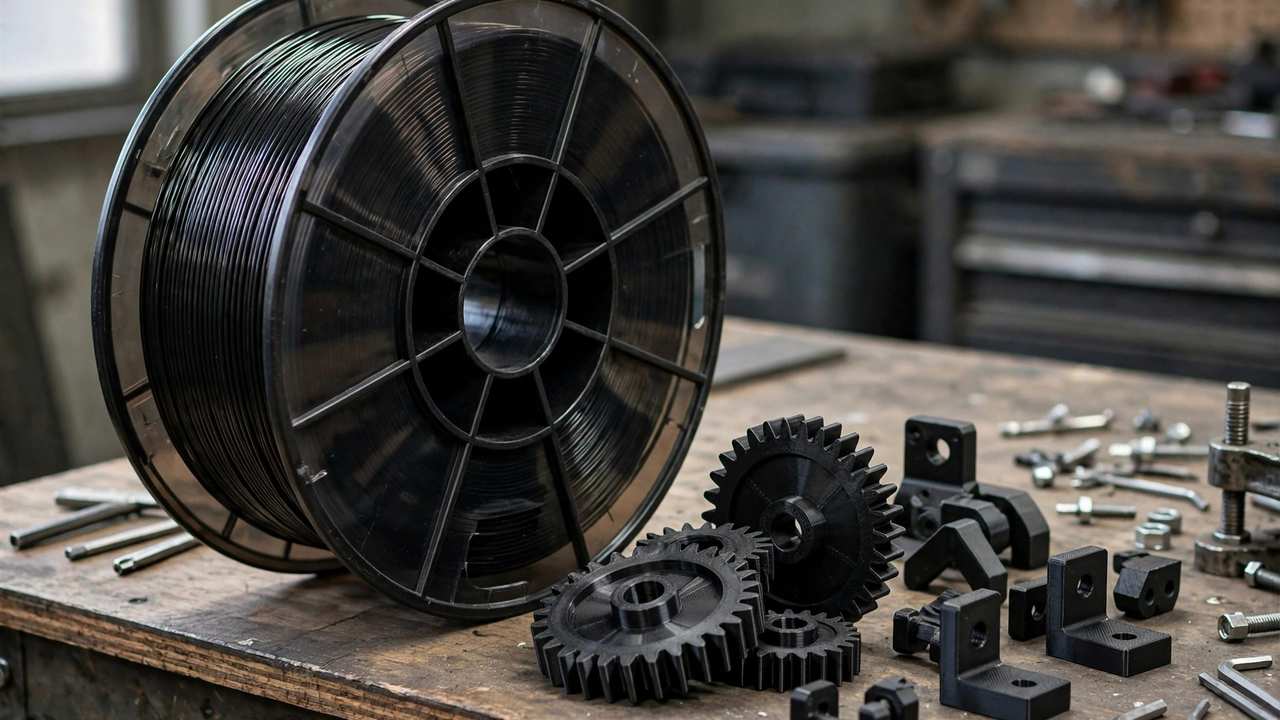
Drones, RC planes, robotics — anywhere grams matter. HIPS’s low density plus good impact resistance makes it a natural for parts that need to be light and survive crashes.
3. Large Prints That Would Warp in ABS
HIPS shrinks significantly less than ABS, so big flat parts stay flat. If you’ve been fighting ABS warping on large prints, HIPS gives you similar toughness with far less drama.
4. Matte-Finish Display Models
The natural matte surface looks premium straight off the printer — no post-processing needed. Miniatures, prototypes for client review, and display pieces all benefit.
5. Investment Casting Patterns
HIPS’s clean dissolution makes it useful for printed patterns and moulds in casting workflows, similar to how PVA is used — but with better mechanical properties during handling.
When NOT to Use HIPS
- Outdoor/UV exposure: Like all styrenics, HIPS degrades in prolonged sunlight. Use ASA instead.
- High-heat environments: Softening around 92°C rules out engine bays and hot enclosures.
- Single-extruder soluble supports: Dissolvable supports need dual extrusion (or manual filament swaps) — HIPS as support only makes sense with a second extruder.
- Food contact: Not the right choice; use PETG.
- When you need maximum strength: Nylon, polycarbonate, or fibre-filled filaments outperform it.
HIPS Filament Guide: Print Settings That Work
Based on manufacturer guidance (Prusa, Fiberlogy, Spectrum):
- Nozzle temperature: 225–255°C (start at 240°C)
- Bed temperature: 100–110°C
- Build surface: PEI sheet works well; HIPS adheres nicely without special adhesives
- Enclosure: Recommended — HIPS likes stable ambient temps, though it’s more forgiving than ABS
- Cooling: Minimal part cooling for strength; moderate for overhangs
- Print speed: 40–60 mm/s for best results
- Drying: Dry before printing if the spool has been open a while — HIPS absorbs some moisture
HIPS vs PVA: Which Soluble Support?
The two dissolvable support materials get compared constantly. Here’s the honest breakdown:
- Solvent: HIPS needs d-limonene; PVA dissolves in plain warm water
- Ease: PVA wins — water is simpler and safer than solvent baths
- Printability: HIPS wins — it’s far less finicky, less moisture-sensitive, and jams less
- Cost: HIPS is generally cheaper per kilo
- Pairing: HIPS pairs with ABS-temperature materials; PVA pairs with PLA/PETG-temperature materials
- Standalone use: HIPS is a genuinely good standalone material; PVA is essentially useless alone
Rule of thumb: supporting PLA or PETG? Use PVA (or breakaway supports). Supporting ABS, or want a dual-purpose spool? HIPS.
The Limonene Process: Step by Step
- Print with HIPS supports, using a dense support interface for clean separation
- Submerge the part fully in d-limonene in a sealed container (ventilated area — it smells strongly of citrus)
- Wait 8–24 hours depending on support volume; gentle agitation speeds things up
- Rinse the part in isopropyl alcohol to remove limonene residue
- Let dry completely before use
Safety: d-limonene is a natural solvent but still an irritant — use gloves, ventilate well, and keep it away from flames. Dispose of used limonene per your local council’s chemical waste guidance.
HIPS vs ABS: Head to Head
Since HIPS is often described as “ABS-lite,” here’s the direct comparison:
- Strength: ABS wins on raw toughness and heat resistance
- Ease of printing: HIPS wins — less warping, less fussy
- Weight: HIPS wins — noticeably lighter parts
- Finish: HIPS wins — matte surface hides layers
- Solubility: HIPS only — ABS doesn’t dissolve in limonene
- UV resistance: Neither is good; both need ASA for outdoor use
Verdict
HIPS deserves a spot in every serious maker’s filament collection — not just as a support material, but as a legitimate lightweight engineering plastic. It’s cheap, prints easily, finishes beautifully, and dissolves on demand. If you’ve never tried it, a single spool will change how you think about supports forever. Keep this HIPS filament guide bookmarked before your next dual-extrusion project.
Exploring more materials? See our filament guides for PETG, TPU, and ASA deep-dives.
HIPS Brands and Where to Buy in Australia
HIPS is a specialty filament, so it’s less widely stocked than PLA — but Australian suppliers do carry it:
- What to look for: 1.75mm HIPS from established filament brands (eSUN, Fiberlogy, and similar mid-tier manufacturers all produce reliable HIPS)
- Price expectations: roughly $35–$55 AUD per kilo — moderately priced, between PLA and engineering filaments
- Colour range: limited compared to PLA; white and natural are most common, which suits its support-material role fine
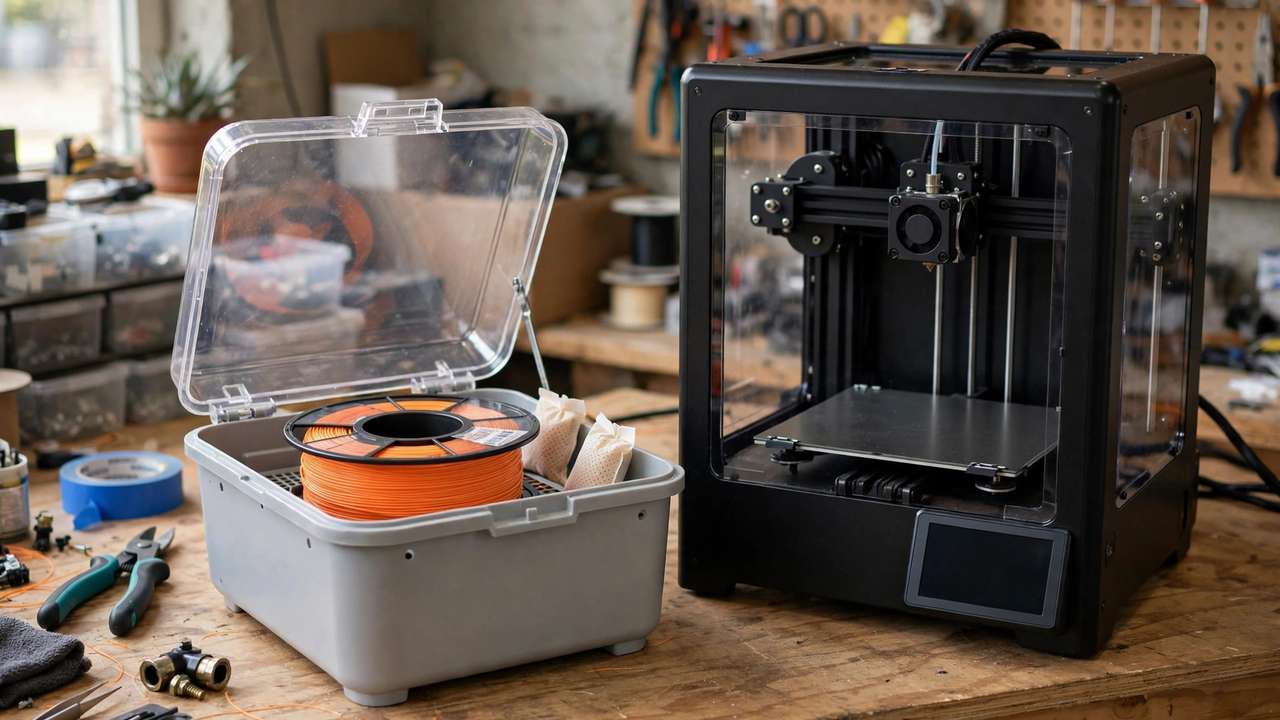
- Storage: keep it sealed with desiccant. HIPS absorbs moisture over time, and wet HIPS prints with popping and poor layer adhesion
Buy from Australian 3D printing specialists rather than general marketplaces where possible — you’ll get fresher stock (less moisture exposure in storage) and someone to call if a spool misbehaves.
Troubleshooting HIPS Prints
- Warping on large prints: increase bed temp toward 110°C, ensure the enclosure is warm before starting, and add a brim for insurance
- Poor layer adhesion: usually too-cool nozzle or too much part cooling — bump to 250°C and reduce fan
- Stringing: dry the filament first; HIPS strings badly when wet. Then tune retraction (start around 4mm at 40mm/s for Bowden, 1mm for direct drive)
- Supports won’t dissolve fully: the limonene is saturated — use fresh solvent for the final soak, and agitate gently. Dense support interfaces dissolve slower; design accordingly
- First layer won’t stick: clean the PEI sheet with isopropyl alcohol; HIPS likes a truly clean surface. A thin ABS-juice or glue stick layer helps on difficult prints
- Elephant’s foot: common with the hot bed HIPS needs — compensate with a slight initial-layer horizontal expansion of −0.1 to −0.2mm in the slicer
HIPS in Multi-Material Workflows
Beyond simple supports, HIPS enables genuinely advanced techniques:
- Dissolvable internal channels: print cooling channels or fluid paths in HIPS inside an ABS part, then dissolve — impossible with breakaway supports
- Assembly jigs: print alignment fixtures in HIPS, assemble parts around them, dissolve the jig away
- Multi-material with purpose: combine HIPS’s matte finish for visible surfaces with ABS’s strength for structural cores
These workflows need a well-tuned dual-extrusion setup — ooze shields or prime towers are mandatory, since HIPS and ABS ooze differently. Budget extra purge material when starting out.
HIPS Storage, Safety and Handling
- Moisture: store sealed with desiccant; dry at 55–60°C for 4–6 hours if printing issues suggest wet filament
- Fumes: HIPS is a styrene plastic — print in a ventilated area or enclosure with extraction, especially for long prints. Not recommended for unventilated bedrooms.
- Limonene safety: d-limonene is a skin and eye irritant; wear nitrile gloves and eye protection when handling baths. Work in ventilated spaces — the citrus smell is strong.
- Disposal: cured HIPS waste goes in general waste; liquid limonene waste goes through council chemical disposal — never down drains
- Fire: like all thermoplastics, HIPS is flammable — standard printer fire safety applies (never leave printers fully unattended; consider a smoke detector above the printer)
The Future of Soluble Supports
HIPS’s position is interesting: PVA is easier (water-soluble) but finicky; newer materials like BVOH dissolve faster than PVA but cost more. HIPS endures because it’s the pragmatic middle — cheap, printable, and genuinely useful standalone. That pragmatic middle is exactly why this HIPS filament guide recommends keeping a spool on hand even if you mostly print PLA. For dual-extrusion users printing ABS-temperature materials, it remains the rational default in 2026, and nothing on the horizon obviously displaces it.
5 HIPS Projects to Try This Month
- Dissolvable support demo: print a small ABS part with internal channels using HIPS supports — watching them vanish in limonene never gets old, and it teaches the whole workflow
- Lightweight drone frame: a HIPS quadcopter frame is light, tough, and cheap to iterate — crash, reprint, repeat
- Matte desk organiser: show off that premium matte finish with a Gridfinity-compatible desk set
- RC car body panels: impact-resistant, lightweight, paintable — ideal for bashers
- Two-material prototype: rigid ABS core with HIPS outer shell — learn multi-material slicing with a practical result
HIPS vs Breakaway Supports: When Dissolving Isn’t Worth It
Dissolvable supports are magical — but not always optimal:
- Use HIPS when: supports are internal/inaccessible, surface finish is critical, or you’re running production batches where manual removal labour costs more than limonene
- Use breakaway when: supports are accessible, the part is a one-off, or you lack a second extruder — well-tuned breakaway supports with good interface settings remove cleanly
- Cost comparison: a limonene bath setup costs ~$30–$50 AUD in solvent and containers; breakaway costs nothing but 10 minutes with pliers
- Time comparison: dissolving takes 8–24 hours of passive waiting; manual removal takes active minutes — for single prints, manual often wins on total turnaround
HIPS Recycling and Sustainability
- Recycling code: HIPS is PS (#6) — check your council: most Australian kerbside programs don’t accept #6, so it goes to general waste or specialist recyclers
- Dissolved HIPS: limonene saturated with HIPS is chemical waste — never pour down drains; use council chemical disposal
- Reduce waste: the best sustainability move is printing supports only where needed — good support settings (low density, smart placement) halve HIPS consumption
- Failed prints: collect and check for local filament recyclers who shred and re-extrude — a growing number operate in Australian cities
Try this weekend: if you have dual extrusion, print one small ABS part with HIPS supports and run the limonene bath. The moment the supports dissolve away leaving a flawless part, you’ll understand why HIPS has such loyal fans. One spool, one experiment — that’s all it takes to add a genuinely new capability to your printing.
Frequently Asked Questions
What is HIPS filament used for in 3D printing?
Primarily as a dissolvable support material (dissolves in d-limonene), and standalone for lightweight, impact-resistant, matte-finish parts.
What temperature do you print HIPS filament?
225–255°C nozzle (start 240°C), 100–110°C bed. Enclosure recommended but less critical than with ABS.
Does HIPS dissolve in water?
No — it dissolves in d-limonene, not water. For water-soluble supports use PVA. Soak 8–24 hours.
Is HIPS better than PVA for supports?
PVA is easier (water-soluble); HIPS prints more reliably and cheaply. Match the support to your model material’s temperature range.
Can you print HIPS without an enclosure?
Yes — it warps far less than ABS. But stable ambient temps still help; avoid drafts.
Material safety data: see the Prusa HIPS knowledge base for detailed print profiles.