3D Printed Christmas Gifts Australians Love
Every December, Australians face the same ritual: crowded shopping centres, inflated prices, and the annual panic of finding gifts that don’t scream “I bought this yesterday at the servo.” Your 3D printer offers an escape route. 3D printed Christmas gifts are personal in a way shop-bought presents can’t match, cost a few dollars in filament, and — with a bit of planning — look genuinely impressive under the tree. This is the Australian maker’s Christmas playbook: what to print, when to start, and how to make plastic look like thoughtfulness.
The critical factor is timing. Christmas has the hardest deadline in the gift calendar, and December is when every maker on the planet is printing simultaneously. Start in late October or early November for the full experience. Starting December 20th limits you to quick prints — still doable, but you’ll miss the showstoppers.
The Christmas Print Calendar
- Late October / early November: Plan your gift list. Decide who’s getting printed gifts, choose models, check filament stock. Order any special filaments (silk, wood-fill, glow) now — shipping gets slow in December.
- November: Print the big pieces — lithophane lamps, large ornaments sets, multi-part gifts. This is your heavy printing month.
- Early December: Medium gifts, personalised pieces, and finishing work (sanding, painting) on November’s prints.
- Mid-December: Quick gifts, ornaments, and gift tags. Reprints of anything that failed.
- Week before Christmas: Assembly, wrapping, and absolutely nothing still on the printer. Buffer time is not optional.
The finishing trap: a print that takes 6 hours needs 1–2 hours of cleanup and presentation to look like a gift rather than a prototype. Budget this time honestly, or you’ll be handing over raw prints with brim remnants on Christmas Eve.
Ornaments: The Christmas Staple
Printed ornaments are the gateway Christmas project — quick, customisable, and universally appreciated.
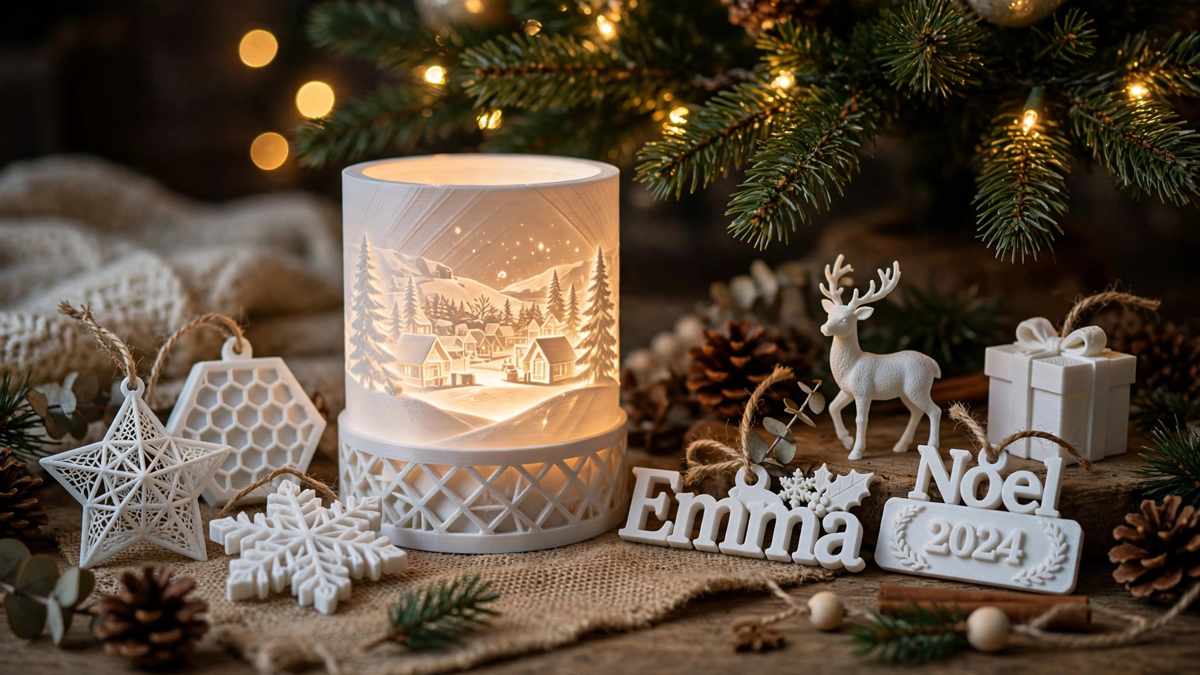
- Personalised baubles: bauble shells with family names, years, or inside jokes embossed or as cut-out text. Design one template, customise per recipient. A set of four matching baubles with each family member’s name is a genuinely moving gift.
- Lithophane ornaments: small curved lithophanes (family photos as 3D reliefs) hung as ornaments. Backlit by tree lights, they’re stunning. White PLA, and they take about 2–3 hours each.
- Geometric / Voronoi ornaments: intricate lattice structures that look far more complex than they are to print. In silk or metallic-look PLA, they rival expensive glass ornaments.
- Australian-themed ornaments: koalas, kangaroos, Southern Cross designs, “Merry Christmas” in the shape of Australia. The expat gift market for these is enormous — Australians overseas love receiving a bit of home.
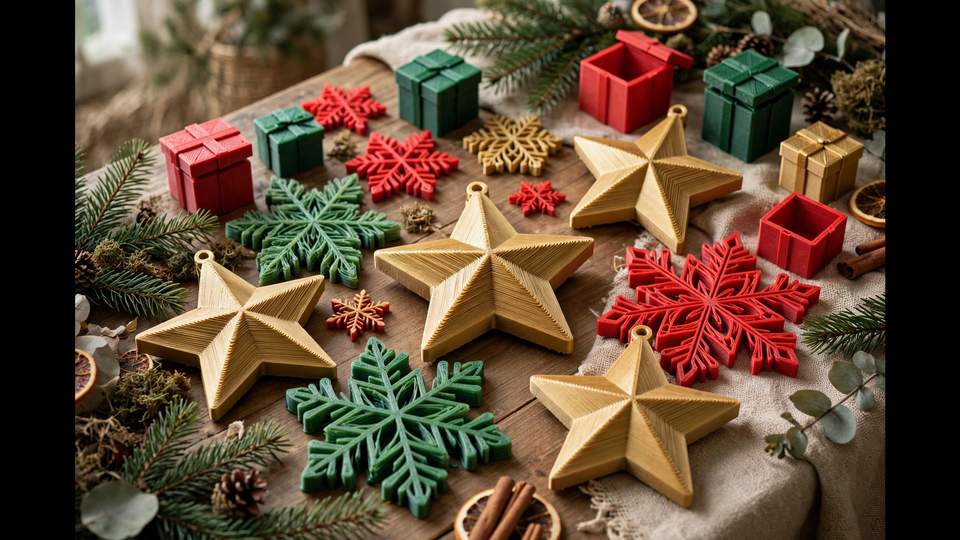
- Cookie-cutter ornaments: print flat festive shapes (stars, trees, snowflakes — or gum leaves for the AU twist), add a ribbon. Quick enough to make dozens for the whole extended family.
Ornament economics: a set of 6 personalised baubles uses maybe $3 of filament and 12 hours of printer time (mostly unattended). The equivalent personalised ornaments from a gift shop run $15–25 each. The maths is absurd.
Personalised Gifts: Names, Photos, Memories
Personalisation is what elevates a print from “neat object” to “cherished gift.” Christmas-specific approaches:
- Lithophane lamps: the ultimate personalised gift — a curved lithophane panel (wedding photo, baby’s first Christmas, family portrait) in a printed base with LED backlighting. It’s the gift people keep for decades. Our gift guide covers the technique; for Christmas, start this in November — it’s a 6–8 hour print plus finishing.
- Custom desk signs: “Dad’s Workshop,” “Mum’s Kitchen,” a child’s name in 3D letters. Simple to design (extruded text), quick to print, and deeply personal.
- Photo frames with a twist: print a frame shaped around the recipient’s interest — a camera-shaped frame for the photographer, a paw-print frame for the dog owner — with their photo inside.
- Memory boxes: a small printed box (hinged or lidded) containing a handwritten note and a small memento. The box is the gift; what’s inside is the meaning.
Festive Decor: Beyond the Tree
- Advent calendars: print 24 small numbered boxes or drawers, fill with chocolates or notes. A reusable advent calendar becomes a family tradition — and beats the cardboard chocolate ones hollow.
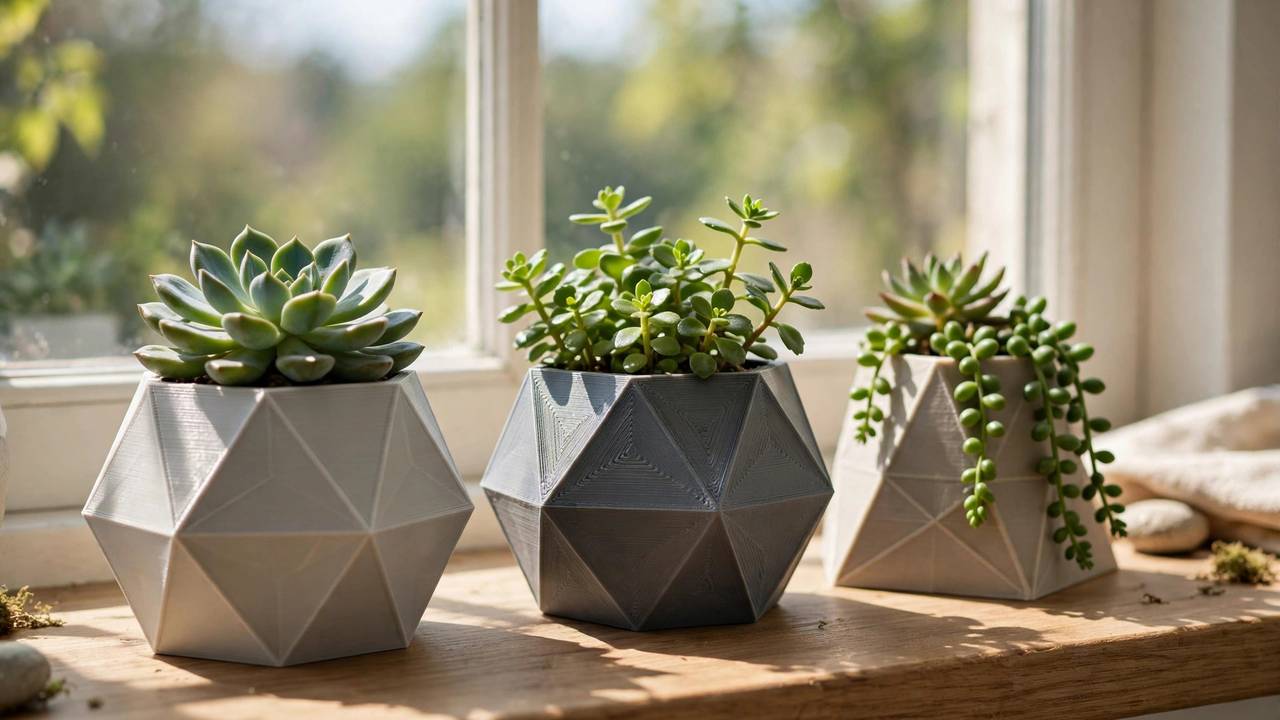
- Table centrepieces: a printed Christmas village, a geometric star lantern, or a festive planter arrangement. Centrepieces get looked at for hours on Christmas Day — make them count.
- Christmas village buildings: print a whole miniature village over November — houses, church, lamp posts, tiny trees. Add $10 of warm-white LED string lights and it’s magical. This is a multi-week project; start early.
- Wreath alternatives: a geometric wreath form (printed in sections, assembled) decorated with real or fake greenery. Modern, unique, reusable.
- Stocking holders and tags: personalised stocking name tags for every family member. Quick prints, big charm.
Gifts for Specific People (Australian Edition)
- For kids: articulated dragons in Christmas colours (red/green/gold silk PLA), fidget toys, puzzle boxes with a small gift inside. Kids don’t care about layer lines — they care that it moves and it’s theirs.
- For grandparents: lithophane ornaments with family photos, large-print custom coasters, a simple tablet stand for video calls with the grandkids. Keep it personal and functional.
- For the BBQ enthusiast: custom BBQ tool holders, personalised tongs handles, a “Grill Master” sign for the outdoor area. Lean into the Australian Christmas (it’s summer — the BBQ is Christmas dinner).
- For beach lovers: custom beach-themed items — a sand-proof phone holder, personalised beach bag tags, a waterproof-ish (PETG!) outdoor shower hook. Australian Christmas is a beach holiday; print for it.
- For makers: filament sample packs in printed holders, a tool organiser sized for their exact tools, calibration-themed desk toys. Our business ideas guide even covers turning this into a side hustle.
- For the hard-to-buy-for: personalisation is the weapon. Their name, their hobby, an inside joke, a shared memory rendered as a lithophane. A custom print beats an expensive generic gift every time.
Filament Choices for Christmas
- Silk PLA (red, green, gold, silver): the Christmas palette. Silk filament’s glossy finish makes ornaments and decorative pieces look premium with zero post-processing.
- White PLA: for lithophanes (mandatory — they only work in white/translucent) and snow-themed pieces.
- Wood-fill PLA: for rustic, Scandinavian-style decorations. Stains beautifully for a natural wood look.
- Marble PLA: for elegant, stone-like ornaments and figurines.
- PETG: for anything outdoors or near heat (Christmas lights get warm; Australian December is hot). Wreath components, outdoor decorations, BBQ-adjacent gifts.
One spool each of red silk, green silk, gold silk, and white PLA (~$120–140 AUD total) covers an entire family’s Christmas printing. That’s the whole gift budget for a dozen people.
Presentation: Making It Look Like Christmas
The difference between “3D printed trinket” and “Christmas gift”:
- Finishing: remove brims cleanly, quick heat-gun pass for strings, light sanding on visible surfaces. Our smoothing guide has the techniques.
- Packaging: tissue paper, small gift boxes (which you can also print!), ribbon. A $2 print in a nice box reads as a $30 gift.
- The story tag: a small handwritten card — “Designed and printed for you, [X] hours, made with love.” The handmade story is half the value.
- Care notes: for functional prints (“hand wash only,” “keep out of direct sun”) — thoughtful and prevents PLA tragedies in the Australian summer.
The Australian Christmas Reality Check
A few local considerations:
- Heat: December in Australia is hot. PLA gifts left in cars, near windows, or outdoors will warp. For anything that might see heat, use PETG. This applies doubly to gifts being posted — a parcel in a delivery van in December is an oven.
- Posting deadlines: if you’re mailing printed gifts interstate, finish printing a week before the post office cutoff. Prints are light (cheap to post) but bulky — factor in packaging.
- Beach Christmas: if your family does Christmas at the beach, print accordingly — sand-resistant, water-tolerant (PETG), and nothing that’ll blow away.
Turning Christmas Printing Into a Side Hustle
Here’s what many makers discover: the same skills that make family gifts can generate real Christmas income. Personalised ornaments, custom lithophanes, and bespoke decorations sell well at:
- Local Christmas markets: November–December markets across Australia are hungry for unique handmade goods. A stall with personalised ornaments ($15–25 each) and lithophane pieces ($40–80) can clear $500–1,500 over a weekend.
- Facebook Marketplace and local groups: “Personalised 3D printed Christmas ornaments — $20, any name” posts perform extremely well in local community groups from October onwards.
- Corporate gifts: businesses order branded or personalised gifts in bulk. A set of 50 company-logo ornaments is a single print run with serious margin.
- Online (Etsy Australia): personalised Christmas items are perennial bestsellers. The lead time for custom work means starting listings in September.
Pricing rule of thumb: 5–8x material cost, with a minimum that respects your time. A $2 ornament should sell for $15–20, not $5. You’re selling personalisation and craftsmanship, not plastic. Our pricing guide covers the maths in detail.
Eco-Friendly Christmas Printing
3D printing has genuine sustainability advantages for Christmas — and some pitfalls to avoid:
- The good: made-to-order means zero waste from overproduction. A printed gift replaces a mass-manufactured item shipped from overseas. PLA is plant-derived and industrially compostable.
- Reusable over disposable: printed decorations used for a decade beat single-season shop decorations. Design for longevity — classic designs, durable materials.
- Recycle failures: don’t bin failed prints. Collect them for recycling programs — our recycling guide covers Australian options. Some services turn waste filament back into new spools.
- The pitfall: printing novelty items nobody keeps is just plastic waste with extra steps. Print things people will treasure, not trinkets that hit the bin on Boxing Day.
- Filament choice: standard PLA has the lowest environmental footprint among common filaments. Specialty and composite filaments are harder to recycle.
After Christmas: Storing Decorations Properly
- Clean first: dust and grime come off easier now than after 11 months in a box.
- Avoid roof storage: Australian attics exceed 60°C in summer — PLA decorations will warp. Cupboards or under-bed storage instead.
- Pad fragile pieces: lithophanes and thin ornaments need tissue or bubble wrap. Don’t just toss them in a tub.
- Label boxes: “Christmas 2026 — ornaments, 24 pieces” saves archaeological expeditions next December.
- Note what worked: which designs were hits? Which failed? A quick note now makes next year’s planning effortless.
However you celebrate — beach or backyard, big family or quiet few — a 3D printer turns Christmas from a shopping obligation into a making celebration. Start early, print with love, and enjoy the look on people’s faces when they realise you made that. The best gifts aren’t bought; they’re built, layer by layer, with thought in every extrusion. Merry Christmas, makers — may your beds stay level and your filament stay dry through the silly season and beyond.
Frequently Asked Questions
When should I start 3D printing Christmas gifts?
Late October or early November for the full range. November is your heavy printing month; early December for medium gifts and finishing; mid-December for quick prints and reprints. Nothing should still be printing in the week before Christmas.
How much does it cost to 3D print Christmas gifts?
Very little — most gifts use $1–5 of filament. Four spools (red silk, green silk, gold silk, white PLA, ~$120–140 AUD total) can cover gifts for a dozen people. Personalised baubles that cost $15–25 each in shops cost under $1 in filament.
What is the best filament for Christmas ornaments?
Silk PLA in festive colours (red, green, gold, silver) — the glossy finish looks premium with no post-processing. White PLA for lithophanes. PETG for anything outdoors or near heat, given Australia’s hot December.
Can I 3D print personalised Christmas gifts?
Absolutely — personalisation is 3D printing’s superpower. Embossed names on ornaments, lithophane photo lamps, custom desk signs, and memory boxes are all straightforward projects that transform a print into a cherished gift.
Will PLA Christmas decorations survive Australian summer?
Indoors, yes. In direct sun, hot cars, or near Christmas lights that run hot — no. PLA softens around 55–60°C. For anything that might see heat, use PETG. This is especially important for gifts being posted in December.