Here’s how to recycle failed prints Australia-wide, from mail-back programs to home extruders.
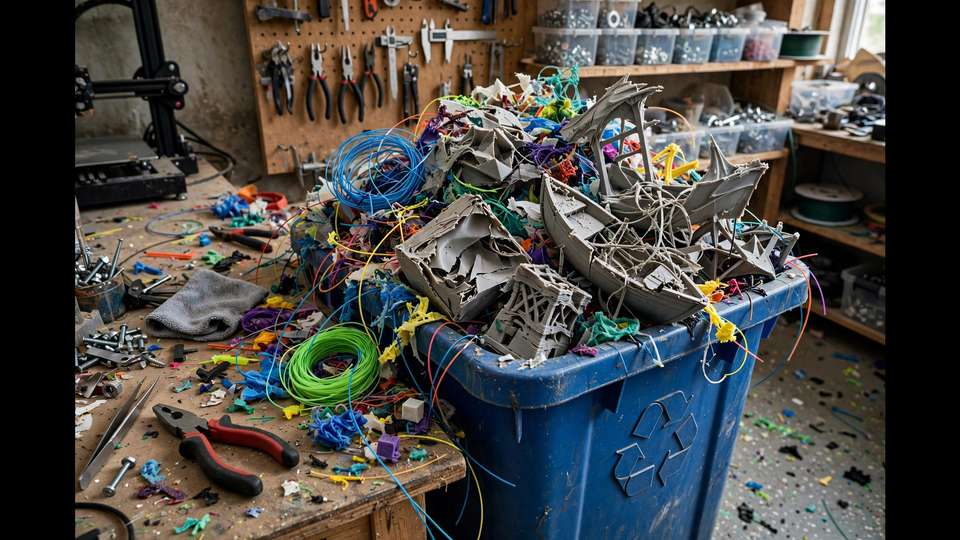
Every 3D printing hobbyist knows the bin. The spaghetti-monster first layers. The supports that took longer to print than the model. The benchy with the melted face. If you want to recycle 3D prints Australia-wide, the honest news comes first: your yellow-lid kerbside bin is almost certainly not the answer, and the little recycling triangle stamped on your filament spool doesn’t mean what you think it means.
This guide covers what actually works for Australian makers — the kerbside truth, TerraCycle’s mail-back boxes, the PLA composting myth, turning failed prints back into filament at home, and the calibration habits that shrink your waste bin in the first place.
Recycle Failed Prints Australia: The Short Answer
Most Australian councils will not accept 3D printing plastics in kerbside recycling. Not PLA, not PETG, not ABS — regardless of what the recycling symbol suggests. There are two reasons, and both are structural rather than anyone being difficult.
First, kerbside recycling in Australia is built around packaging, not products. Your yellow-lid bin is designed for bottles, tubs, cans and cardboard — a stream that materials recovery facilities (MRFs) sort at speed using near-infrared scanners keyed to common packaging plastics. A failed PLA dragon is not packaging, it’s not in the expected stream, and it’s not what the sorting equipment is calibrated to recover.
Second, volume and contamination. Even where a facility could technically identify a plastic, recyclers buy sorted plastic in bulk by type. The trickle of 3D printing waste from households is too small and too mixed to be commercially sortable — one bin might hold PLA, PETG and ABS-like resin supports together. Mixed plastics contaminate each other in reprocessing, so MRFs reject the lot rather than risk spoiling a bale of good material.
The takeaway: failed prints in the yellow bin don’t get recycled — they contaminate the stream. Check your council’s A–Z recycling list online, but expect “general waste bin” for anything the specialist options below can’t take.
The easiest way to recycle failed prints Australia makers actually use is a dedicated scrap bin plus periodic mail-back.
What Those Little Recycling Triangles on Your Filament Actually Mean
Flip over a filament spool and you’ll often find a chasing-arrows triangle with a number in it. Here’s the decoder ring, because it matters:
- Resin identification codes run 1–7. They identify the plastic type for sorters — they are not a promise that your council accepts the item.
- PLA is almost always code 7 (“Other”). Code 7 is the miscellaneous bucket — the same code covers polycarbonate, bioplastics and laminates. Australian MRFs generally do not sort code 7 into a recoverable stream, because it’s a grab-bag of incompatible plastics.
- PETG is typically coded 1 or 7 depending on the manufacturer, and ABS is usually 7 as well. Even when a code matches something kerbside-accepted (like 1), the item still fails the “is it packaging?” test.
- Spools are their own problem. Cardboard spools go in paper recycling; plastic spools are bulky, mixed-plastic items that kerbside systems don’t want.
So the symbol tells you what the plastic is, which is genuinely useful — just not for the yellow bin. It matters enormously for the options below, because every legitimate recycling path for 3D print waste starts with sorting by material type. Keep your PLA failures separate from your PETG and ABS. Future-you will be grateful.
Recycle Failed Prints Australia: TerraCycle Mail-Back Option
TerraCycle runs a 3D Printing Materials Zero Waste Box — a paid mail-back program where you fill a box with scrap and send it to their processing facilities (return shipping is included in the box price). It’s the most straightforward “someone responsible takes it” option available to Australian makers. TerraCycle operates an Australian storefront, so check its Australian site for current box sizes, availability and pricing — it changes, and quoting a stale price helps nobody.
Here’s what the program accepts, straight from TerraCycle’s own listing:
- ABS, ASA, PS, HIPS, PP, PE, PET, PETG, PC-ABS, Nylon and TPU — filament scraps and failed prints
- Empty filament spools
And here’s the catch that surprises most people: PLA is not accepted in the 3D printing box. TerraCycle directs PLA into its separate Biodegradable Plastics box instead. Given that PLA is the single most common filament in home 3D printing, that means the average hobbyist’s waste stream needs two boxes — which is exactly why sorting by material (see above) matters before you spend a cent.
Is it worth it? A Zero Waste Box makes sense if you print a lot, run a small print farm, or split one with your makerspace or a few printing mates — pooling waste turns a pricey solo purchase into a reasonable shared cost. For the occasional failed benchy, focus on waste reduction instead (below). TerraCycle’s Australian regulated-waste recycling page lists the 3D Printing Materials Zero Waste Box — start there to see what’s currently offered locally.
Composting doesn’t recycle failed prints Australia-wide the way many blogs claim — PLA needs industrial facilities.
Composting PLA: The Myth That Needs Busting
“But PLA is biodegradable!” — yes, under very specific conditions that your backyard compost bin almost certainly does not meet. Let’s be precise, because this is where well-meaning makers go wrong.
PLA breaks down through hydrolysis followed by microbial digestion, and that process needs sustained heat around 55–60°C plus moisture — the conditions inside an industrial composting facility, not a backyard pile. In Australia, plastics certified as commercially compostable carry the AS 4736 standard mark (there’s a separate AS 5810 standard for home compostability, which PLA 3D prints effectively never meet). A backyard compost heap rarely sustains 55°C+ for the weeks required, so a PLA print buried in it will sit there looking smug for a very long time. Landfill is worse: modern landfills are dry and oxygen-poor, which is the opposite of what PLA needs to degrade.
What about the green-lid FOGO (food organics, garden organics) bin? Some Australian councils accept certified compostable items in FOGO, but policies vary council to council, and a printed PLA part is rarely on the accepted list even where compostable packaging is. Never put 3D prints in FOGO without checking your council’s specific rules — contamination gets entire truckloads of organics rejected.
The bottom line: treat “biodegradable” as a description of chemistry, not a disposal instruction. For PLA print waste, composting is not a practical recycling path for home makers.
Home Filament Extruders: Turn Failed Prints Into New Filament
The most satisfying option — genuinely closing the loop — is recycling your own waste into new filament. The workflow is straightforward in concept: shred failed prints and supports into flakes, dry them thoroughly, and feed them through a filament extruder that melts and re-forms them into a fresh spool.
The machines have real names you can look up: Filabot and ReDeTec’s ProtoCycler+ are the two best-known desktop systems, each pairing a shredder/grinder with an extruder. Both are serious pieces of kit aimed at heavy users, schools and makerspaces rather than casual hobbyists — check current pricing before budgeting, as they sit firmly in “equipment purchase” territory rather than “accessory” territory.
A few realities to go in with eyes open:
- Single material only. The shredder doesn’t care what you feed it, but the filament coming out does. PLA and PETG mixed together makes weak, inconsistent filament that jams nozzles. Sort ruthlessly.
- Cleanliness matters. Pull out metal inserts, magnets, paint, glue and any non-plastic bits before shredding. One stray screw can wreck a shredder blade.
- Expect 2–3 good cycles. Every melt shortens the polymer chains, so recycled filament gets progressively more brittle with weaker layer adhesion. Drying your regrind (around 60°C for a few hours) between passes slows the decline but can’t stop it.
- Quality is “functional,” not “premium.” Home-extruded filament is brilliant for prototypes, brackets, jigs and test prints. For the display piece or the part under load, most makers still reach for virgin filament.
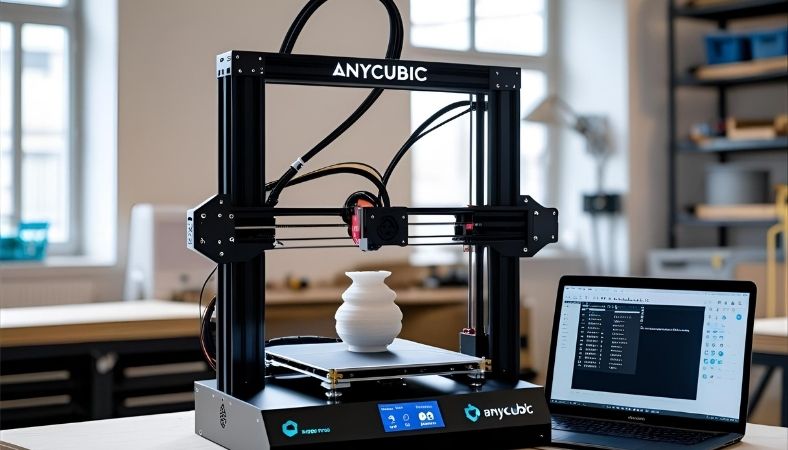
For most Australian hobbyists, the realistic version is the makerspace route: several Aussie fab labs and library makerspaces run PLA collection bins or shared extruders. Ask your local space what they accept before turning up with a bin bag — and if your space doesn’t have a program yet, suggesting one (with a few mates to share the workload) is how these things start. If you’re still choosing equipment for general printing, our guide to the best budget 3D printer for home use is a good starting point before you invest in recycling hardware.
Reduce First: The Cheapest Way to Recycle 3D Prints Australia
Here’s the uncomfortable maths: every recycling option above costs money, effort, or both. The highest-leverage move is generating less waste in the first place — and most failed prints are preventable.
- Calibrate once, print cleanly forever. The majority of failures come from poor first-layer adhesion, wrong temperatures or wet filament. Spend an afternoon dialling in your bed level, Z-offset and flow rate and you’ll cut failures dramatically. Our Cura slicer setup guide covers the settings that prevent the most common failures.
- Dry your filament. Moisture-absorbed filament causes stringing, blobs, weak layers and mid-print failures — particularly in humid Australian summers. A basic dry box with silica gel, or a dedicated filament dryer, pays for itself in saved spools.
- Orient to minimise supports. Rotating a model so overhangs self-support can eliminate supports entirely. When supports are unavoidable, tree or organic supports use far less material than classic grid supports.
- Prototype small. Testing fit with a 20-minute partial print beats discovering a dimensional error six hours into the full model.
- Design smarter. Learning basic modelling — even just enough to add fillets, split large models, or design print-in-place joints — prevents a whole category of failures. Our roundup of the best 3D modelling software for 3D printing includes free options to start with.
- Repurpose before recycling. Failed prints make excellent test pieces for paint techniques, filler for silicone mould-making, or raw material for craft projects. A “calibration box” of old prints for testing slicer settings beats sacrificing fresh filament every time.
What About Resin Print Waste?
Resin printing produces its own waste stream — supports, failed prints, used gloves, paper towels and IPA — and none of it can go near recycling. But it has one critical rule that makes handling simple: cure it first.
Uncured resin is hazardous waste; cured resin is inert plastic. So every scrap that touched liquid resin — supports you snip off, failed prints, gloves, paper towels — should be exposed to UV (sunlight works fine in Australia) until fully cured, then goes in your general waste bin. Never put liquid resin, or anything dripping with it, in any bin.
Used IPA deserves its own routine: leave the container in sunlight so dissolved resin cures and settles; filter through a coffee filter and reuse it several times. When finally spent, let it evaporate fully in a ventilated area away from ignition sources, cure the residue under UV, and bin the solid. Never pour IPA or resin down drains or onto soil — it’s toxic to aquatic life and a fast track to a council fine.
Recycle 3D Prints Australia: FAQs
Can I put PLA 3D prints in my yellow recycling bin?
No. Australian kerbside recycling is designed for packaging, not 3D printing plastics. PLA is resin code 7 (“Other”), which materials recovery facilities don’t sort into a recoverable stream, and mixed print plastics contaminate the recycling stream. Put failed prints in general waste unless you’re using one of the specialist options above.
Is PLA compostable at home?
Effectively no. PLA needs sustained temperatures of 55–60°C with moisture — industrial composting conditions under the AS 4736 standard. Backyard compost heaps rarely sustain that heat, and landfill conditions are even less suitable. Don’t put PLA prints in your compost or FOGO bin without checking your council’s specific rules.
Does TerraCycle accept PLA 3D printing waste?
Not in its 3D Printing Materials Zero Waste Box — PLA goes into TerraCycle’s separate Biodegradable Plastics box instead. The 3D printing box accepts ABS, ASA, PS, HIPS, PP, PE, PET, PETG, PC-ABS, Nylon, TPU and empty spools. Check TerraCycle’s Australian site for current availability and pricing.
Can failed prints be turned back into new filament?
Yes, with a plastic shredder and a filament extruder (such as Filabot or the ReDeTec ProtoCycler+). It only works with clean, single-material waste, and expect 2–3 re-melt cycles before the filament becomes too brittle for reliable printing. It’s most practical for heavy users, schools and makerspaces; casual hobbyists are usually better off reducing waste.
What do I do with resin supports and failed resin prints?
UV-cure everything that touched liquid resin — supports, failures, gloves, paper towels — until fully hardened, then dispose of it in general waste. Never bin liquid resin or pour resin or used IPA down drains. Used IPA can be sun-cured, filtered and reused several times.
What’s the cheapest way to deal with 3D printing waste?
Prevent it. Calibrate your printer properly, dry your filament, orient models to minimise supports, and prototype at small scale before committing to long prints. A well-tuned printer and dry filament eliminate the majority of failed prints — which beats every recycling option on cost, effort and environmental impact.