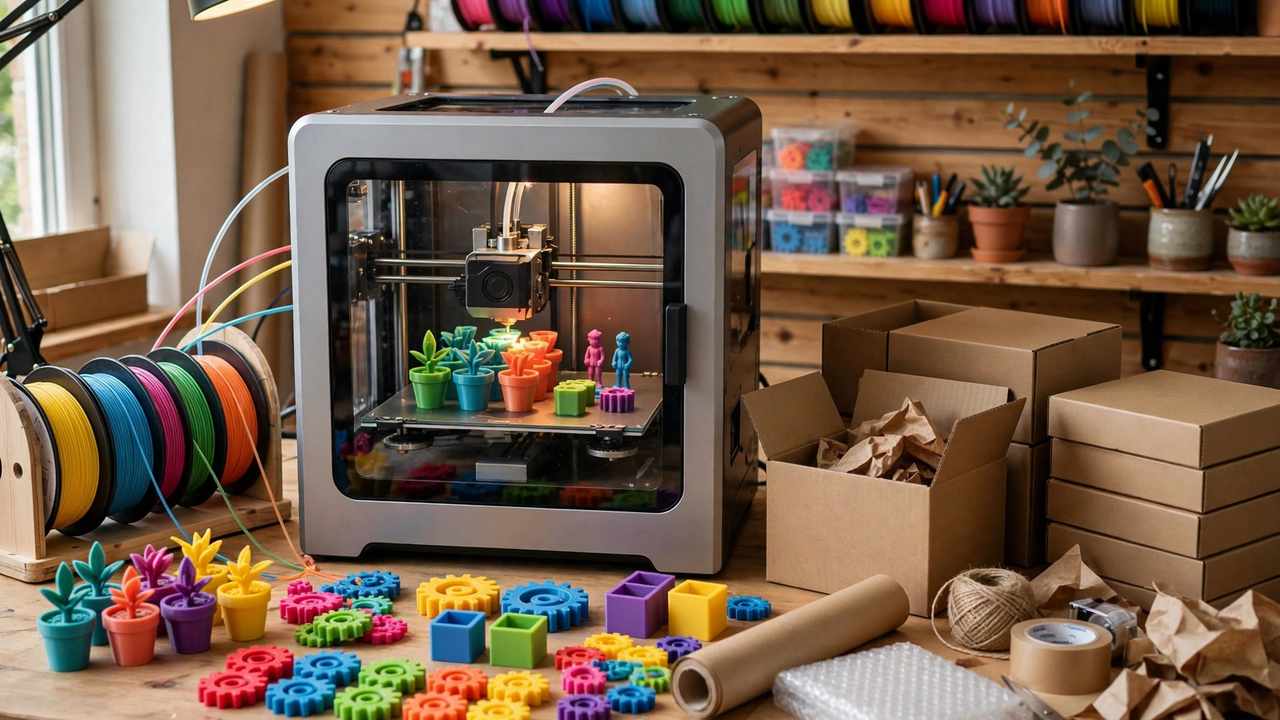
Every 3D printer owner has had the thought: could this machine pay for itself? The honest answer is yes — but not the way most YouTube thumbnails suggest. Learning how to make money with a 3D printer in Australia — the make money 3D printer Australia playbook, if you like — means understanding local costs, realistic pricing, and which business models actually survive contact with customers. This guide covers what works, what does not, and the practical Australian specifics (ABN, GST, postage) that overseas guides always skip.
Let us set expectations first. A single hobby printer will not replace your salary. But it can realistically generate a few hundred to a couple of thousand dollars a month as a side income once you find your niche — and makers who scale to small print farms with the right products do considerably better. The key is treating it like a business from day one: know your costs, price properly, and sell something people actually want.
Know Your Real Costs Before Pricing Anything
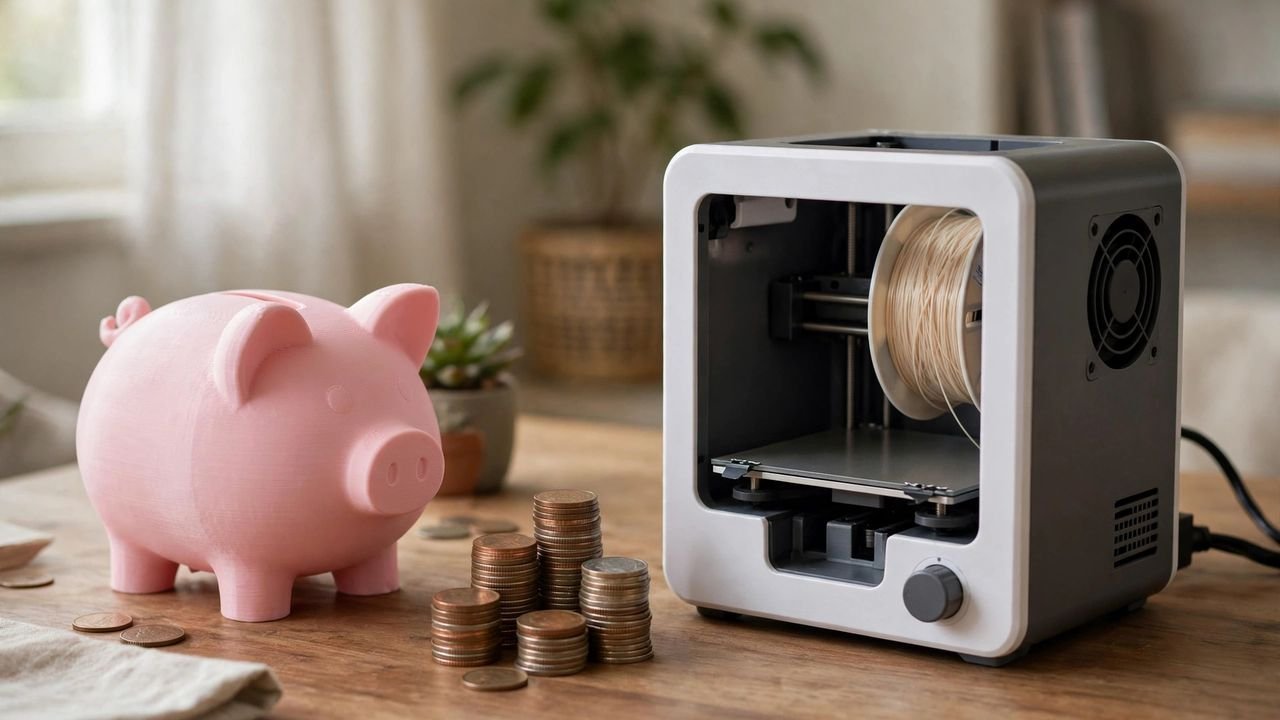
The number one mistake new sellers make is pricing based on filament cost alone. A print that uses $3 of filament did not cost you $3. Your true cost per print includes:
- Filament: $25–45/kg for quality PLA/PETG in Australia; roughly $0.03–0.05 per gram printed
- Electricity: a typical FDM printer draws 100–150W; at ~30c/kWh, a 10-hour print costs around $0.30–0.45
- Machine wear: nozzles, build surfaces, belts — budget a small amount per print hour
- Failed prints: expect 5–15% failure rate; your successful prints must cover the failures
- Your time: design, slicing, post-processing, packing, customer messages — this is the big one most people forget
- Postage: Australia Post parcel rates; a small parcel interstate runs $10–15
- Platform fees: Etsy takes about 6.5% transaction fee plus payment processing; factor in ~10% total
Add it all up and a small print you sell for $25 might carry $8–12 in true costs. Price below your real costs and you have an expensive hobby, not a business. A simple rule: total your costs, then double it for wholesale thinking — or triple it for retail. If the market will not pay that, the product is wrong, not your maths.
Make Money 3D Printer Australia — Model 1: Selling Products Online
The most common way to make money 3D printer Australia-wide is designing or licensing products and selling them through online marketplaces. Etsy Australia remains the best starting point for handmade and designed goods — its buyers expect unique items and accept higher prices than eBay shoppers. eBay Australia works for more commodity-style items. Your own Shopify store makes sense once you have proven demand.
What actually sells? The pattern is consistent: useful, hard-to-find items beat decorative trinkets. Cable management solutions, board-game inserts and organisers, drone and RC parts, replacement knobs and clips for appliances, custom brackets — things people search for because they have a specific problem. Decorative items (vases, figurines) face brutal competition from sellers racing to the bottom on price.
Critical legal note: check licences before selling anyone else’s design. Many free models on Printables and Thingiverse use Creative Commons Non-Commercial licences — selling those prints is copyright infringement. Look for designs explicitly marked for commercial use, buy commercial licences from designers on Cults3D or MyMiniFactory, or — best of all — design your own products. Original designs are also the only reliable moat against competitors. A unique product you designed cannot be undercut by someone downloading the same free file, and it gives your shop an identity instead of looking like every other print store.
Business Model 2: Print-on-Demand and Prototyping Services
Instead of selling products, sell your capacity. Local businesses, inventors, engineering students, and tradies regularly need one-off parts: a prototype for a product idea, a replacement bracket for obsolete equipment, a jig for a workshop. These customers pay for speed and convenience, not the lowest price.
Pricing for services typically runs $5–15 per machine-hour plus materials in the Australian hobby market, with professional prototyping commanding more. A simple approach: quote per job based on estimated print time plus a setup fee ($20–40) that covers slicing, communication, and post-processing. Always take a deposit for custom work — 50% upfront is standard and filters out time-wasters.
Where to find clients: local Facebook maker groups, Gumtree’s services section, Airtasker, and — most effectively — telling every engineer, tradie, and product designer you know that you own a printer. Word of mouth dominates this segment. One happy customer with a broken dishwasher part becomes three referrals.
Business Model 3: Digital Products
The highest-margin way to make money 3D printer Australia-wide is selling the files, not the prints. Design a genuinely useful model, sell the STL on Cults3D, MyMiniFactory, or your own site, and every sale is nearly pure profit — no filament, no postage, no failed prints. The catch is that you need real design skills and products people cannot easily find free.
Successful digital sellers typically specialise: board-game accessories, cosplay props, RC upgrades, workshop organisation. Build a catalogue of 20–30 quality models and the long tail starts working for you. Some designers also run Patreon or “tribes” subscriptions offering monthly exclusive models — recurring revenue beats one-off sales.
Make Money 3D Printer Australia: The Admin Bit — ABN, GST and Tax
Overseas guides never mention this, so here is the Australian reality. If you are running a business (not just a hobby), you generally need an ABN — it is free to register through the Australian Business Register via business.gov.au. Whether your activity counts as a business or a hobby depends on intent, scale, and regularity; the ATO’s guidance is the authority here, not internet forums.
GST: you must register for GST once your turnover reaches $75,000 per year. Below that it is optional. If you sell on Etsy, note that Etsy handles GST on its fees, but your own sales are your responsibility.
Tax: income from your printing is taxable income, and you can deduct legitimate expenses — filament, machine depreciation, electricity portion, postage, platform fees. Keep records from day one: a simple spreadsheet of income and expenses saves enormous pain at tax time. Consider talking to an accountant once revenue becomes regular; a one-hour consult is cheap insurance.
Choosing Your First Niche
If you are starting from zero, picking a niche feels paralysing — but it does not need to be permanent. Start with what you know: if you are into board games, design board-game accessories; if you ride motorbikes, design bike mounts and farkles; if you have kids, design toys and organisers. Domain knowledge is an unfair advantage — you understand the problems because you live them, and you know where those customers hang out online.
Validate before committing deeply. List three to five products, run them for a month, and watch what happens. The market will tell you quickly what it wants — one product outselling the rest 10-to-1 is the market handing you your niche on a platter. Too many beginners spread across ten unrelated product types and learn nothing; focus lets you learn faster, photograph better, and build a recognisable shop identity that customers remember and return to.
Marketing: Getting Your First Customers
The best product in the world earns nothing if nobody sees it. For Australian 3D printing sellers, a few channels consistently deliver. Instagram and TikTok are made for this — short videos of prints coming off the bed, time-lapses, and satisfying post-processing clips attract exactly the audience that buys printed goods. Post regularly, use relevant hashtags (#3dprinting #3dprinted #aussiemaker), and engage genuinely with the maker community rather than just broadcasting.
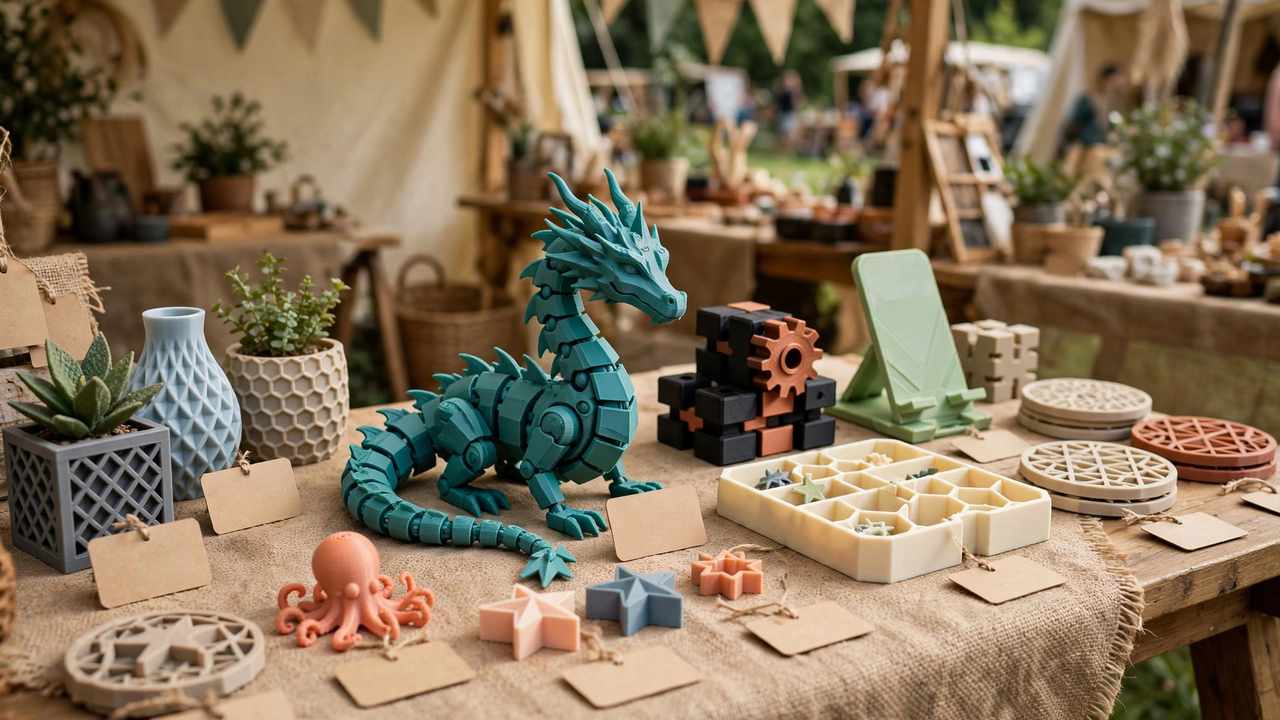
Local markets are underrated. A stall at a weekend market lets customers hold your products, which sells functional prints far better than photos. You will also learn more in one market day about what people want than in a month of online analytics. Reddit communities like r/3Dprinting and Australian maker Facebook groups are good for feedback and occasional sales, though check each community’s self-promotion rules before posting.
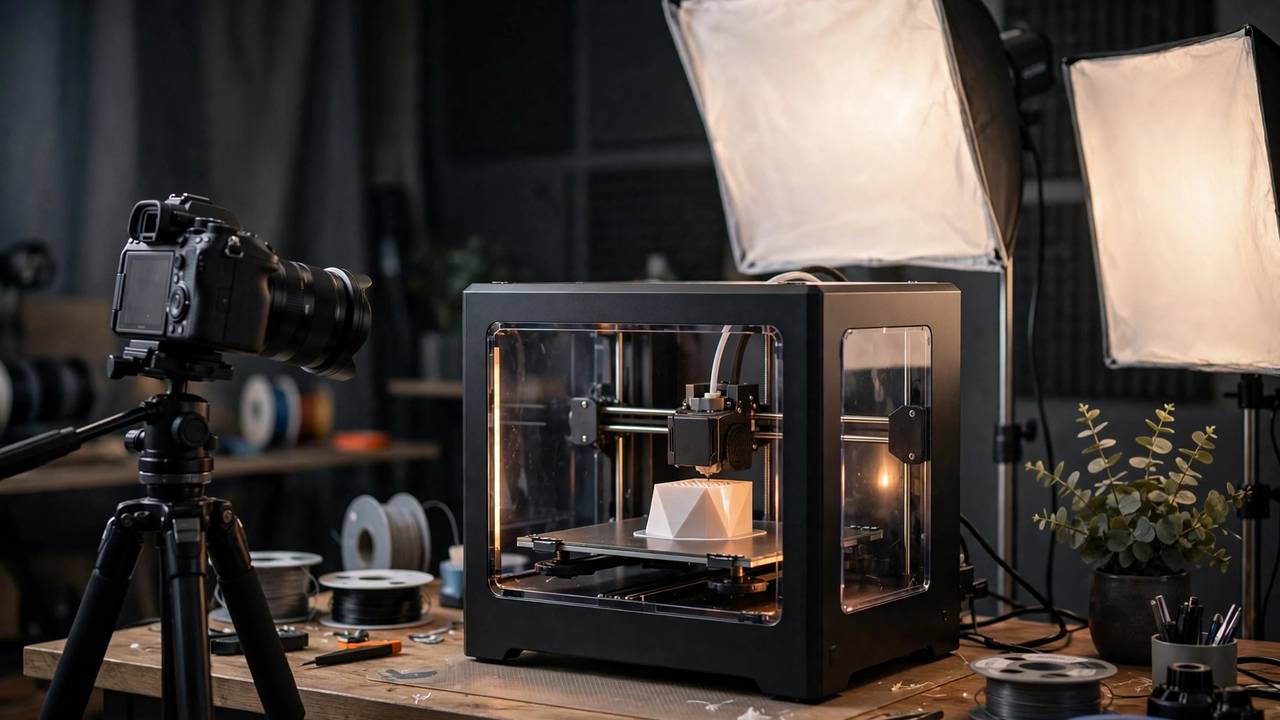
Whatever channel you use, photography is your storefront. You do not need a studio — a white poster board, natural window light, and a phone camera produce perfectly good product shots. Show the item in use, not just on a white background: a cable organiser holding actual cables, a planter holding an actual plant. Lifestyle context sells.
Scaling Up: From Side Hustle to Print Farm
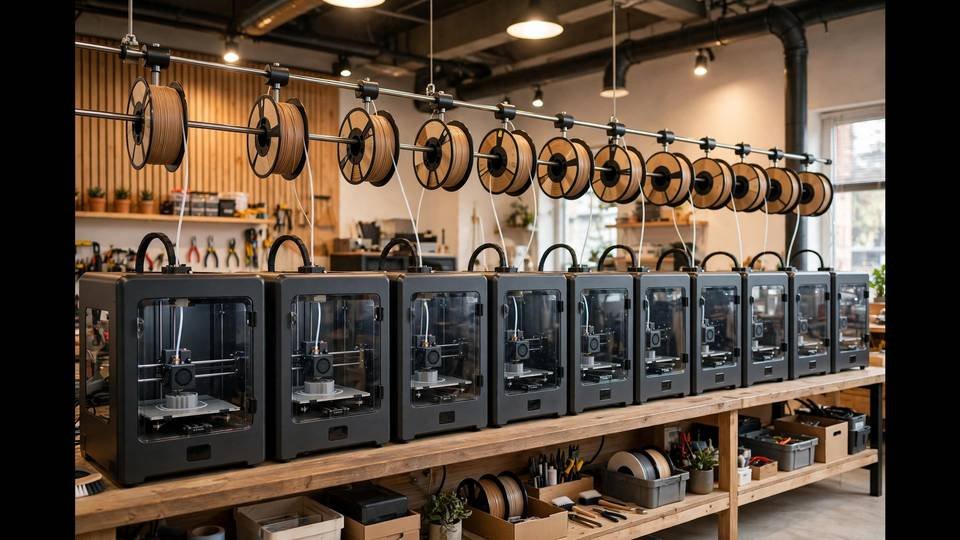
If demand outgrows one printer, scaling is straightforward but capital-intensive. The maths that matters: each additional printer should pay for itself within 3–6 months from the revenue it generates. Buy the same model you already know — standardising on one printer means one set of profiles, one stock of spare parts, and one troubleshooting knowledge base.
Automation multiplies output without multiplying your hours. An OctoPrint or Klipper setup with a camera lets you monitor prints remotely; automated ejector systems exist but are fiddly. The real efficiency wins are boring: batch-slicing overnight, standardised filament colours for your best sellers, and a packing station with pre-printed labels. Treat it like the small factory it is becoming.
At print-farm scale, filament buying changes too. Buying 5–10 kg spools or boxes of 1 kg spools from Australian wholesalers cuts material costs significantly versus single-spool retail. And this is where design skills pay off most — a product engineered to print fast, with minimal supports and no post-processing, can double your effective hourly output versus a pretty but slow-printing design.
What Does Not Work (Save Yourself the Pain)
Printing other people’s viral designs and racing to the lowest price. Margins collapse, and you are one copyright complaint from a banned shop.
Competing on price with overseas sellers. You cannot beat a Chinese print farm on cost. Compete on speed (local delivery), customisation, and designs they do not have.
Buying five printers before selling anything. Prove the business model with one machine. Scale after demand exists, not before.
Ignoring post-processing time. Sanding, painting, and assembly eat hours. If your product needs heavy finishing, price it accordingly or redesign for print-and-ship simplicity.
Realistic First-Year Roadmap
Months 1–2: Master your printer and calibration. Print for yourself and friends. Learn your true costs by tracking every gram and every hour.
Months 3–4: Pick one niche and list 5–10 products on Etsy Australia. Price properly using real costings. Expect slow sales while you learn what the market wants.
Months 5–8: Double down on what sells, drop what does not. Improve photos and listings — presentation matters enormously. Consider one complementary channel (local markets, Instagram).
Months 9–12: If demand justifies it, add a second printer. Systematise: standard operating procedures for your best sellers, batch printing, streamlined packing. Register your ABN if you have not already.
A realistic first-year goal for a side hustle is covering your costs plus a few thousand dollars profit — with the systems and knowledge to scale in year two. Anyone promising passive income riches from a single Ender is selling you something.
Frequently Asked Questions
Do I need an ABN to sell 3D prints in Australia?
If you are operating as a business rather than a hobby, yes — register for a free ABN through the Australian Business Register. Marketplaces like Etsy may also ask for it.
How much can I realistically earn with one 3D printer?
If your goal is to make money 3D printer Australia-wide as a side income, a few hundred to a couple of thousand dollars per month is realistic once you find a profitable niche. It depends far more on what you sell than on the printer itself.
Can I sell 3D prints of models I downloaded for free?
Only if the licence allows commercial use. Many free models are Non-Commercial licensed — selling them infringes copyright. Always check the licence, buy commercial rights, or design your own models.
What sells best for 3D printing businesses?
Useful, problem-solving items: organisers, replacement parts, brackets, board-game accessories, RC/drone parts. Functional niches consistently outperform decorative items.
Do I need to charge GST on 3D printed items?
GST registration becomes mandatory at $75,000 annual turnover. Below that it is optional. Keep records regardless, and consult the ATO or an accountant for your situation.
Before selling a single print, make sure your machine produces consistent quality — start with our PETG settings guide for strong functional parts that customers will not return.